Choosing commercial kettlebells for your gym may seem like a simple task. Buy a kettlebell set, and members perform kettlebell swings, strength training, and other functional training movements. After all, we all know that kettlebells have some huge benefits, including - full body conditioning, diverse exercise selection, and power development with exercises like snatches and swings.
Seems simple enough, right?! However, after a quick Google search, you may come to realize that there are quite a few options within the kettlebell space.
Let us help you simplify the process and give you a quick rundown of your kettlebell options and suggestions for the kettlebell sets that best suit your gym.
What’s Out There?
Okay, whether you did an online search or not, I’ll tell you what you’ll likely find - competition kettlebells, cast-iron kettlebells, plate-loaded adjustable kettlebells, handles that go onto dumbbells to turn them into kettlebells, and sand kettlebells - and that’s just on page 1. Who knew there were this many options when it comes to commercial kettlebell sets?!
In all reality, there are only about 2, maybe 3 kettlebell variations you should consider.
Many of the other options are primarily targeted towards home gyms, seeking more versatility and efficiency.
Best Options
The first option here is the competition kettlebell sets. Competition kettlebells are designed specifically for kettlebell sport. For anyone not well-versed in the world of kettlebell sport, it is pretty much exactly what it sounds like - a competition using kettlebells. There are multiple formats for how this goes down; however, a typical competition involves max reps of certain movements (clean and press, snatch, etc.) in 10 minutes. It’s a grueling test of strength and endurance.
Now, because of the sport demands, specific kettlebells are necessary. Essentially, all competition kettlebell weights are the same size, from about 15 pounds all the way to the heavier weights of around 100 pounds. The actual dimensions often vary slightly by manufacturer, but each manufacturer typically keeps dimensions identical, regardless of kettlebell weight. You may wonder, “Why does this matter?” Well, in all reality, it doesn’t unless you are competing in the kettlebell sport, in which case, you want to be able to increase the weight of your kettlebell as you improve without having to learn a new technique. Essentially, this is similar to if Olympic weightlifters had to increase the size of the barbell each time they hit a PR. This would slightly alter the technique each time, making progress more difficult.
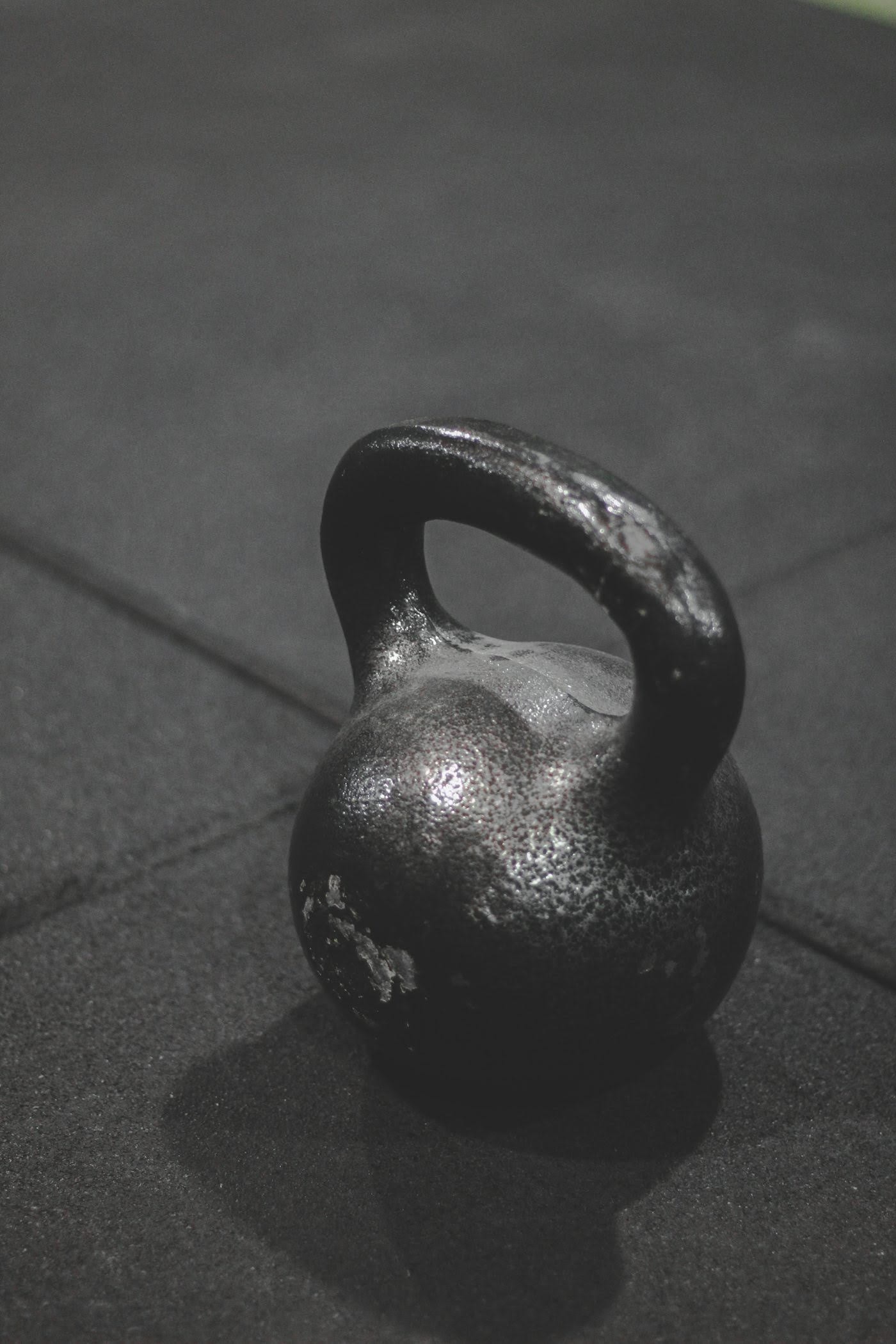
The second option is your traditional cast-iron kettlebell set (side note: competition kettlebells are often made of either steel or cast-iron). The traditional solid cast-iron kettlebell is going to vary considerably in size. If you have ever seen the little tiny kettlebells - you know the ones that look like the 70-pound kettlebell and the 45-pound kettlebell had a 5-pound, newborn kettlebell, you know just how much variation in size there can be.
Weird analogy, maybe? But the point is, these kettlebells are going to look much different bell to bell. Honestly, it doesn’t really matter, though. Cast-iron kettlebell sets are also going to typically be cheaper than competition kettlebell sets.
These kettlebells are certainly the most common. They are incredibly durable and cost-efficient.
The final option you may consider is sand kettlebell sets. I won’t spend too much time here because this is very niche area in the world of kettlebells; however, if you are a commercial gym catering to strongmen, this may be worth considering. After all, you really don’t want Eddie Hall throwing cast-iron kettlebells. Even with a durable rubber coating, I don't think they stand a chance.
Last point here before we move on to which option fits which gym. For home gym owners, you could consider a variation of an adjustable kettlebell or an attachment for dumbbell conversion. These are designed to save space in home gyms, as you can change weights easily. These allow you to decrease quantity when adding kettlebells to your home gym. However, when looking at commercial options, they aren’t as durable, and the benefit of space saving doesn’t matter quite as much.
What's Best for My Gym?
Okay, you’ve seen the kettlebell options, but you still aren’t sure what will be your best bet.
We got you.
For 95% of commercial fitness center owners, your traditional cast-iron kettlebells are the way to go.
Now, whether these are rubber-coated, color-coded, or powder-coated doesn’t really matter.
That’s more of a personal preference. Now, of course, these are sold individually, but you are going to want a full set. A full set varies, but typically at a minimum 6-8 kettlebell pairs ranging from 15 to 70 pounds is what you need. I wouldn't decrease quantity, as this will help your members be able to meet their strength training and exercise goals.
Here’s why we say traditional cast-iron kettlebells:
#1) Competition kettlebells are largely overkill for the standard commercial gym.
Now, if your gym has a portion of your member base genuinely interested in kettlebell sport, of course, your gym is now in the 5% - that is just rare. For the general population, a traditional kettlebell will more than do the job. It will also save you money without compromising quality or durability.
#2) Sand kettlebells are very niche and will not be something members are likely familiar with.
From beginners to advanced athletes, these will likely be unfamiliar.
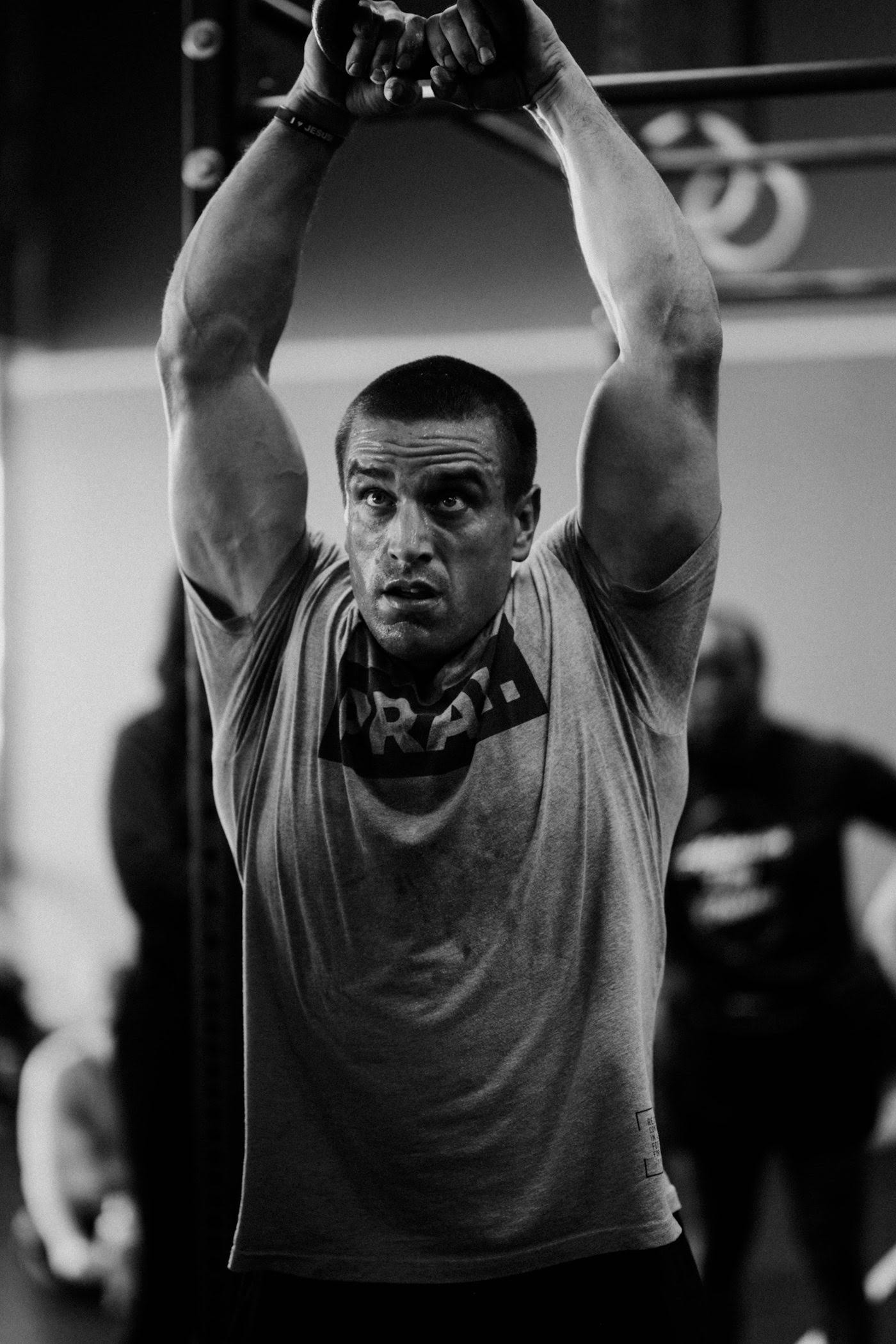
#3) Traditional cast-iron kettlebells are what you would find in CrossFit gyms.
Obviously, if you are a CrossFit gym, these are an obvious choice.
However, even if not, many members like performing HIIT-style or functional fitness workouts, and these are a great option.
At the end of the day, traditional and competition are very similar.
The two kettlebells are both incredibly durable, typically color-coded, and you won’t go wrong for your commercial kettlebell needs and your members' strength training goals.