
Are you new to lifting weights or the gym as a whole? Maybe you are stuck in a rut when it comes to training? Are you looking to learn a new skill or try a new discipline within fitness culture? Maybe you are coming back from an injury and want specific guidance following physical therapy? Do you lack accountability? Or just enjoy having someone to push you?
If any of these sound familiar, a personal trainer may be helpful.
As a former personal trainer, I will tell you these are just a few of the reasons that gym goers look into personal training. Each client comes to the relationship with different strengths, needs, and fitness goals, but one thing is for sure: the right fitness personal trainer can help. The problem is, how do you find Mr. or Mrs. Right? Well, not that Mr. or Mrs. Right, but you get the idea.
But, before we go any further, what exactly is a personal trainer?
A personal trainer is kind of like a day trader.
You may be wondering where I am going with this, but just hold on. For the most part, trading stocks is a pretty easy gig to get into. It is true that almost anyone can call themselves a day trader, but that doesn’t mean they are successful. In the same way, almost anyone can get a weekend certification and become a personal trainer. For this reason, it is important you do a little bit of digging to determine if this trainer is, to use the day trader analogy, making millions or can't get out of the red.
Essentially, a personal trainer works at a gym, helping clients by offering personalized coaching, typically in a 1-on-1 setting.
This service is normally an add-on to your existing membership or an entirely separate membership altogether. A personal trainer can be an employee of the gym, a separate entity that simply rents space from the gym, or can even be the owner of the gym; it really depends. Sometimes, personal trainers are paid a flat rate from the gym; sometimes they are paid entirely based on bringing in clients, or some combination of both.
So, once you begin working with a personal trainer, there is typically an introductory meeting, this is where topics such as fitness goals, nutrition, experience, injury history, overall health, weight loss, fitness level, and availability are discussed. The trainer may also have you perform some basic movement tests to see where your fitness level, technique, and mobility are at.
The personal trainer's job is to create and coach you through a personal training plan to help you meet your goals (whether that be weight loss, performance, general fitness, etc.). This will include spotting flaws and correcting you with cues, introducing and teaching new exercises as necessary, and holding you accountable to your fitness goals. Some personal trainers are big on motivation and hype, some are more focused on pushing you subtly and through coaching, and some are a combination of both. Sometimes, personal trainers often double as nutrition coaches as well. If that is the case, be sure the nutrition coach has ample nutrition certification as well.
The need for qualified trainers is high in the health and fitness space.
What makes a good personal trainer?

I think, as you are looking for a personal trainer, you are looking for someone with these 4 key traits.
-
Knowledgeable
-
Heart of a teacher
-
Personable
-
Accessible
First, knowledgeable.
You can have the greatest guy or girl in the world as your personal trainer, but if he/she doesn’t know how to design a personal training plan, cue a squat in training, progress you through an exercise program, or appropriately push you in a workout, you are in trouble. At best, you will be missing out on being your best, and at worst, you could be more likely to get injured.
There are a ton of training certifications that personal trainers may have, from sports medicine to corrective exercise specialist to military population group training. In general, these are good as they try to bring some validity to the fitness industry. These don’t necessarily prove that they are knowledgeable and qualified personal trainers, but they are a great start. You want to ensure your personal training coach is a certified personal trainer. Most of these courses require at least a high school diploma.
The gold standard in this space, in my opinion, is the NSCA CSCS certification. NSCA also offers a Certified Personal Trainer certification that is pretty good, too.
You want to know that your potential personal trainer has gone through a course that is more rigorous than a weekend. Bonus points if successful completion of collegiate education (exercise science, kinesiology, etc.) is a part of their resume.
An additional layer of knowledge is whether or not the personal trainer has experience with your goals and/or current training status.
For example, if you randomly picked a personal trainer at a commercial gym, they are likely not prepared to work in training with an aspiring strongman. That is a specific sport within fitness that requires a specific type of knowledge. The same goes if you are an older individual coming from a hip replacement, looking to start strength personal training. That is a very specific goal with a very specific population; thus, training sessions should be especially tailored to that individual. In that case, you should be very selective in looking for a personal trainer.
Second, the heart of a teacher.
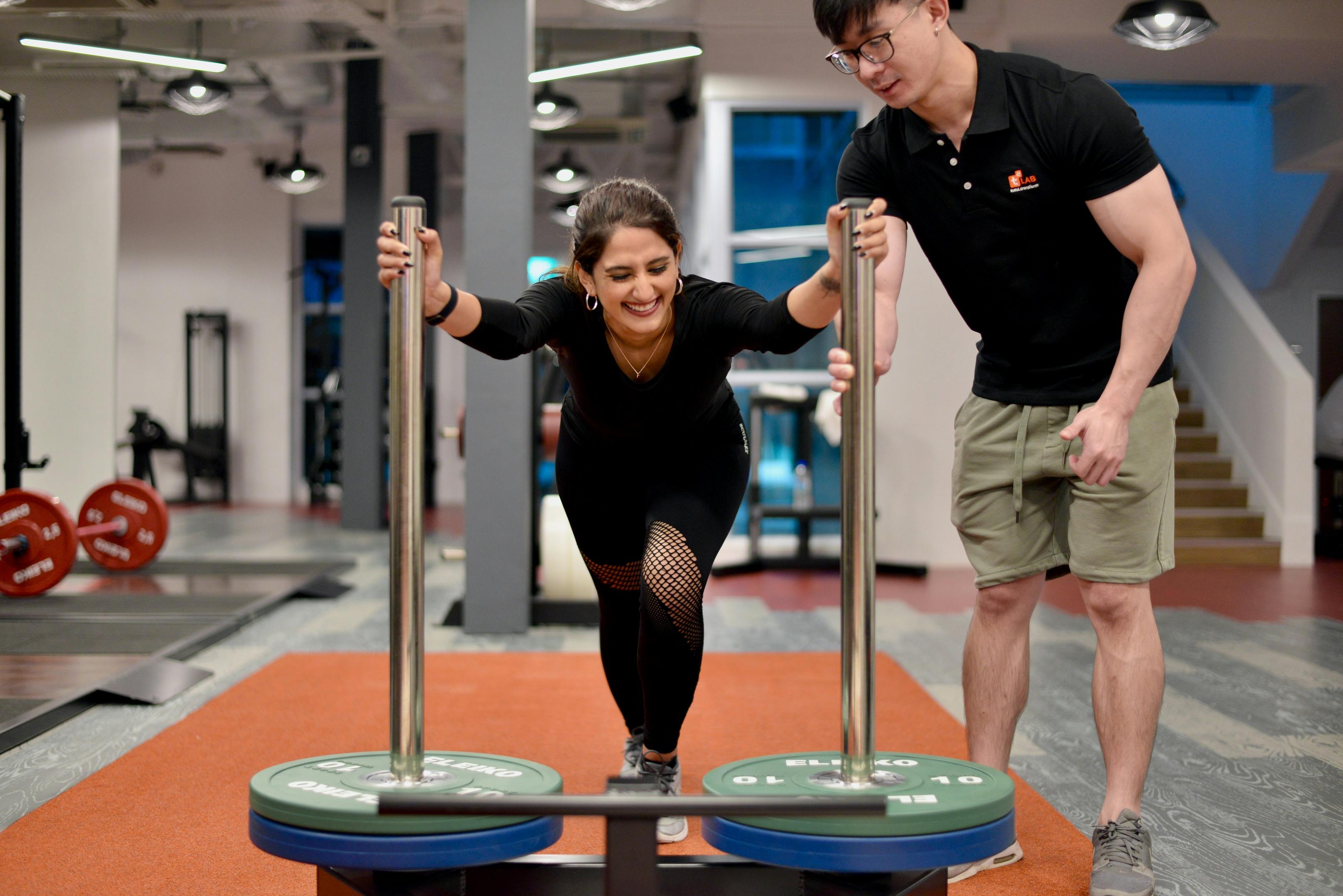
At the end of the day, a personal trainer is a teacher. They are teaching you how to move, how to train, or even how to learn a new skill. You want someone who is patient, who can find your error and give you a cue to fix it.
Third, personable.
This one matters a lot. You are ideally going to be spending a lot of time with your personal trainer. Personal training typically looks like at least 2-3 45-minute sessions per week. You really should like being with them for your personal training. One of the most important things about going to the gym is that you are going. I know it sounds obvious, but if you enjoy being at personal training a little bit more because your trainer is personable and friendly, it is going to ultimately lead to you being more consistent and getting better results.
Finally, accessible.
You can have a trainer who passes the first three traits with flying colors. They can be friendly, super smart, and yet able to explain complex topics in a way that makes sense. Ultimately, if the trainer is not accessible, it doesn’t matter. What I mean by accessible here is a few things:
First, is the location convenient? Don’t pick a personal training location that is difficult to fit into your week. I don’t care how good it is; going to the gym works when you are consistent in showing up. Don’t let location or commute be a reason you don’t get the results you want.
Second, is the pricing affordable? Can you financially commit to showing up consistently for 6 months plus? Personal training can be expensive. We will talk about some ways around that soon, but for a personal training session, you are looking at anywhere from $30-150+. You’ve got to count the cost before you commit.
Third, do your schedules align? Don’t commit to personal training with a trainer who can’t see you consistently and help you follow your fitness plan. Again, as with the other two points, if you can’t make it to the gym, it doesn’t matter how great the trainer is.
This didn't make the list of four, but additionally, consider a personal trainer's “body” of work.
This is in no way the only consideration, but if the trainer is out of shape, can’t demonstrate any of the proper movements, and is telling you to work harder, it is hard to have trust and believe he or she is credible. This doesn’t mean the personal trainer has to be an elite bodybuilder, but are they applying the personal training principles to their own lives? You know, the same principles they are trying to teach you.
Going back to the day trader example, I know for sure I’m not taking stock advice from someone who is losing money every month.
Additional things to keep in mind

Don’t be afraid to try multiple personal trainers initially, especially if you see this as a long-term commitment. You may not know what you are looking for until you try out a few different personal training programs, coaching styles, and gym environments. You are trusting this person with your health for the foreseeable future. There is nothing wrong with taking your time to try out a few different trainers and exercise programs.
If you are new to the gym, consider personal training for the short term.
Look at it as a way to learn the movements, receive coaching, and gain confidence to train on your own.
A really nice transition here is 1-2 months of personal training, 1-2 months of small group training, and then sticking with independent training or class fitness training.
Now, this will certainly look different for everyone, but especially if you are concerned about the cost, this is a great way to introduce strength training and fitness training into your life without breaking the bank. One of the benefits of being at a well-run CrossFit gym or strength class gym is that you can still receive coaching, but at a more reasonable price.
You may really like small group training as well. This can be a great way to get great coaching and support while saving you some money. One of the biggest benefits of small group training sessions is that you have other people to push you. Fitness training can be hard; having not only a coach, but a team around you working hard can make all the difference.
Ask lots of questions, especially in your intro meetings. Questions like:
“What are some fitness goals that you have helped your clients achieve?”
“Why did you get into personal training?”
“How are you continuing your education to stay up-to-date on new research?”
From national academies to health clubs, from Planet Fitness to being a YMCA member, you will find personal trainers. However, not all personal trainers are created equal. Make sure they have experience with your health and wellness goals.
Finally, having a personal trainer is great. However, they cannot do the work for you. Yes, they can write the workouts, coach you through it, and push you when it gets hard, but ultimately, you’ve got to do the work.
And that work, when comprised of appropriate strength training and cardiovascular training in your fitness journey, will lead to healthy living.