
“I don’t even believe I stretched, you wanna know why? Because I never seen a Cheetah stretch before he go get his prey,” - Deion Sanders
I hate to break it to you, but you and I aren’t Deion Sanders or, for that matter, a Cheetah. The former NFL and MLB standout, and current University of Colorado head football coach, may have claimed he didn’t need to stretch before working out, but for all the rest of us mere mortals, it is a necessity.
Now, what exactly that stretching or warming up looks like can vary quite a lot, primarily depending on activity, age, and injury history.
Before we jump into that, though, let’s take a look at why stretching is important. For the sake of this article, we will include warming up and stretching as the same category, even though there are slight differences.
Why does stretching matter before a workout?
In order to work out effectively, you need a warm-up. More often than not, if you see or know someone who gets away with skipping their warm-up, they are either 1) not working out very hard, 2) more likely to get injured, or 3) quite young.
Warming up and pre-workout stretching allows your body to ease into the movements for the day. If you’ve ever been around a bunch of dudes who used to play sports but haven’t been active for a while, you’ve probably seen the following scenario:
One guy challenges another, whether it is a 100m sprint, 1-on-1 basketball, or even max pushups. It starts out competitive and fun; the rest of the guys are getting a kick out of it. However, all of a sudden, at the 80m mark, the tight muscles strike - one guy starts grabbing his hamstring, or as one guy goes up for a layup, he comes down, grabbing his calf. A physical therapist will definitely be needed soon.
You see, the human body is incredibly resilient when given progressively increasing loads over time and allowed to gradually increase with ample time to recover and adapt.
These injuries typically happen for two main reasons. First, the competitor exposed their body to a stress (sprinting, jumping, or max effort pushups) that their body was not ready for. Second, the competitor did not properly warm up and stretch beforehand.
Proper warm-ups, which include stretching, are key to gradually exposing your body to the demands you will put on it that day. You wouldn’t get in your car on a cold morning and go pedal to the metal; in the same way, you shouldn’t walk into the gym, sit on a bench, and start lifting 225lbs. Sure, you may be able to get away with it a couple of times, but over time, you are much more likely to find yourself dealing with tweaks, nagging pains, and injuries.
A proper warm-up, including stretching, allows your muscles to prepare for your workout. It also gets your blood flowing and unlocks greater mobility as you begin your training. Additionally, it gives you time to get your mind right before working out. After all, so much of training is mental.
Now, before we go much farther, let’s consider the two primary types of stretching.
First, static stretching.
This is probably what comes to mind when you think about workout stretching - think toe touches, arm behind the head, calf stretch, shoulder stretch across the body, or quadriceps stretch. There is nothing wrong with static stretching, but it is not ideal for these stretches to be done before working out. Static stretching is best suited for your post-workout stretch. This is because your muscles will be warm at that point, and static stretching can help further lengthen them. With static stretching, you should feel a slight pull on the muscle but not to the point of painful, working your way to full range.
Hitting a nice calf stretch or hamstring stretch as a part of your post-workout stretch is a great idea.
Second, dynamic stretching.
This is the type of stretching you want to include before working out, not static stretching. This workout stretching is, as it is named, dynamic, meaning you are constantly moving and changing positions.
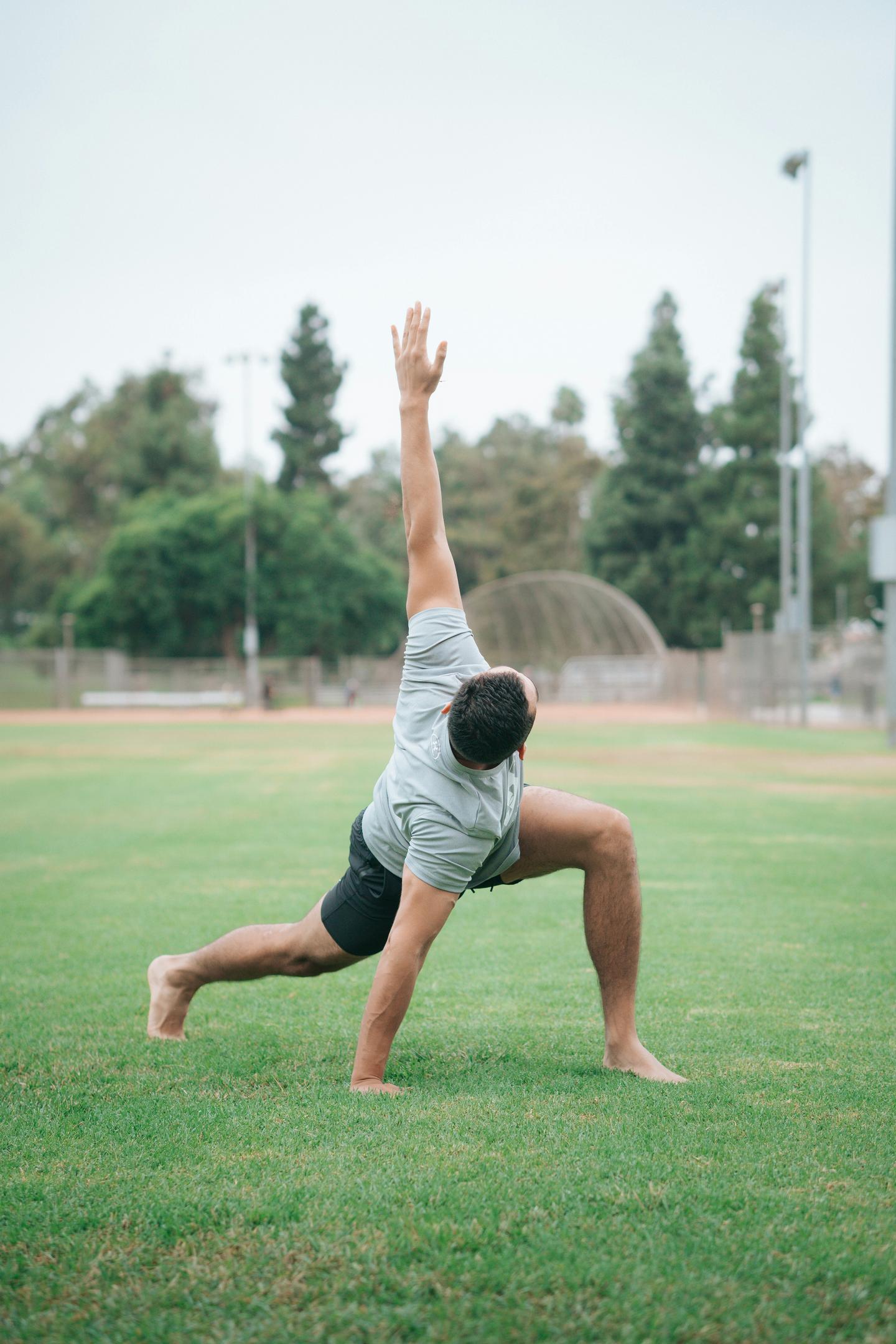
Some examples of dynamic stretches and movements include high knees, butt kicks, arm circles, hip circles, spiderman stretch with rotation, leg swings, and bootstrappers.
Dynamic stretches do a better job of raising your core temperature and helping you get “warmed” up. They also do a better job of touching the end range of motion repeatedly instead of just staying there. Dynamic stretches allow you to be better prepared for strength and explosive movements.
Let’s look at a few key factors that will influence your warm-up.
Activity
Hopefully, it comes as no surprise that the way you stretch and warm-up for an upper body day at the gym, versus a trail run, versus an Olympic lifting session is going to vary considerably.
So when looking at what type of warmup and stretching to include, you certainly need to consider the end goal. Ultimately, the end goal of warming up and stretching before a workout is to be able to do the activity you are warming up for and prevent injury. No one goes to the gym to perform the best warm-up they can. No, you want the most effective warm-up so that you are ready to attack your workout.
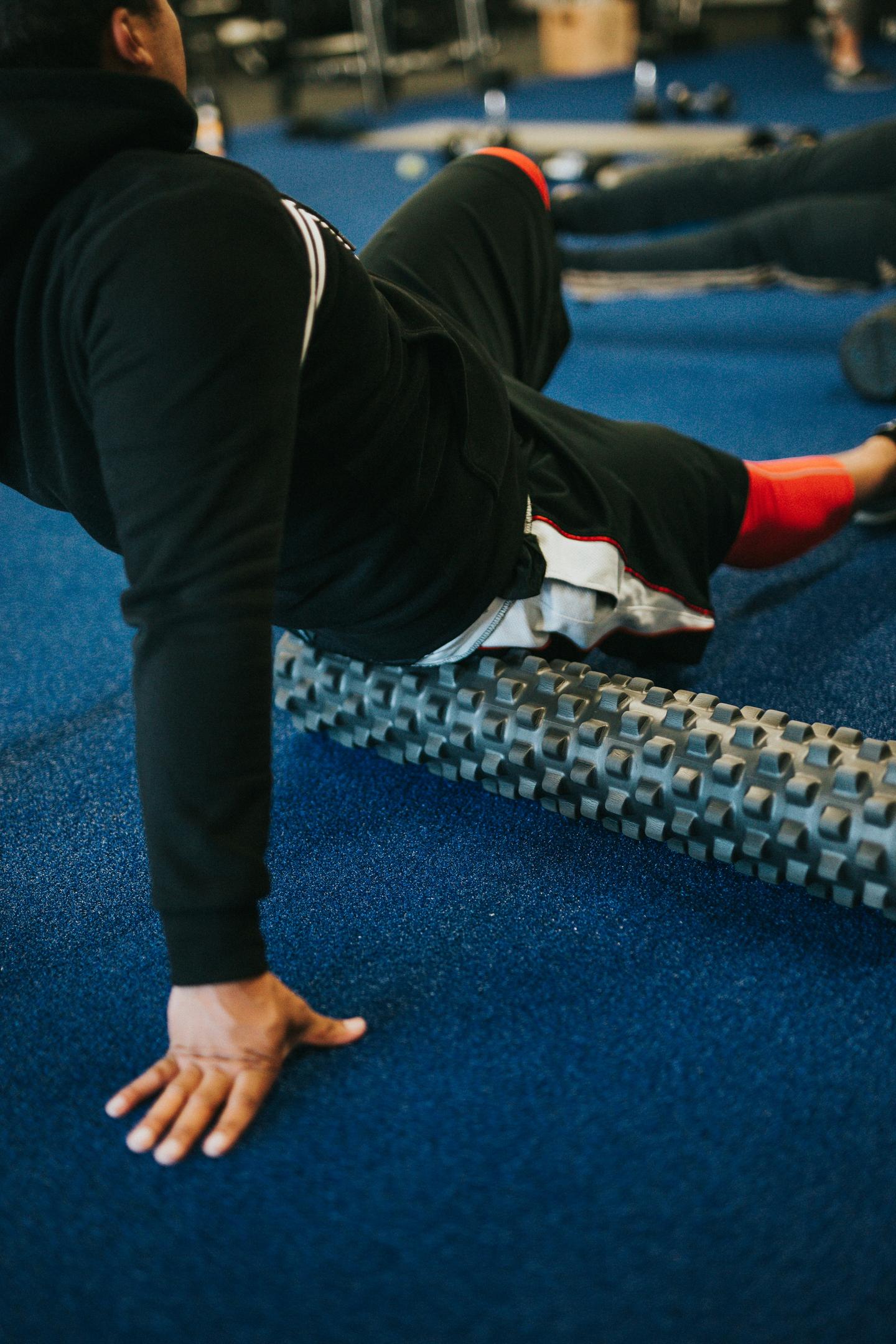
Knowing this, you should probably include a general warm-up that will look very similar for all three workouts listed above. This general warm-up can include things like 5 minutes of easy cardio, foam rolling or lacrosse ball for soft tissue work, downward dog, upward dog, cat-cow, and other general full-body movement preps for your workout. After the general warm-up, this is where your stretching starts to differ depending on the activity.
The gym-goer doing upper body is going to want to make sure his or her shoulders are warm, as part of pre-workout stretching.
This may include some banded exercises. The runner is going to make sure to spend extra time prepping their calves and Achilles as well as their hips prior to heading out. The Olympic weightlifter will spend additional time on the shoulders and hips, as well as warming up with an empty barbell.
As a general rule, the more strenuous the workout, the more strenuous your warm-up needs to be. If you are warming up for an easy run, your warm-up will likely be much easier (and faster) than if you are warming up for a max back squat.
Age
We hate to say it, but age does indeed affect our warm-ups and workout stretching.
Again, this is a generality, but typically, the older you get, the longer (and more serious) you should take your warm-up. You’ve no doubt seen the middle or high schooler who can take off sprinting without a care in the world. Well, it would be incredibly ill-advised for a 50-year-old to do that.
Even if you are younger now, take the time to warm up properly; it will help reduce pain. You can certainly get away with it for now, but over time, those injuries and tweaks will catch up to you if you don’t take care of your body.
Injury History
This one is certainly up to you. As you work out more and more, you begin to learn what your body needs. This will not happen overnight, but it is cool when you start to understand what works for you and what doesn’t.
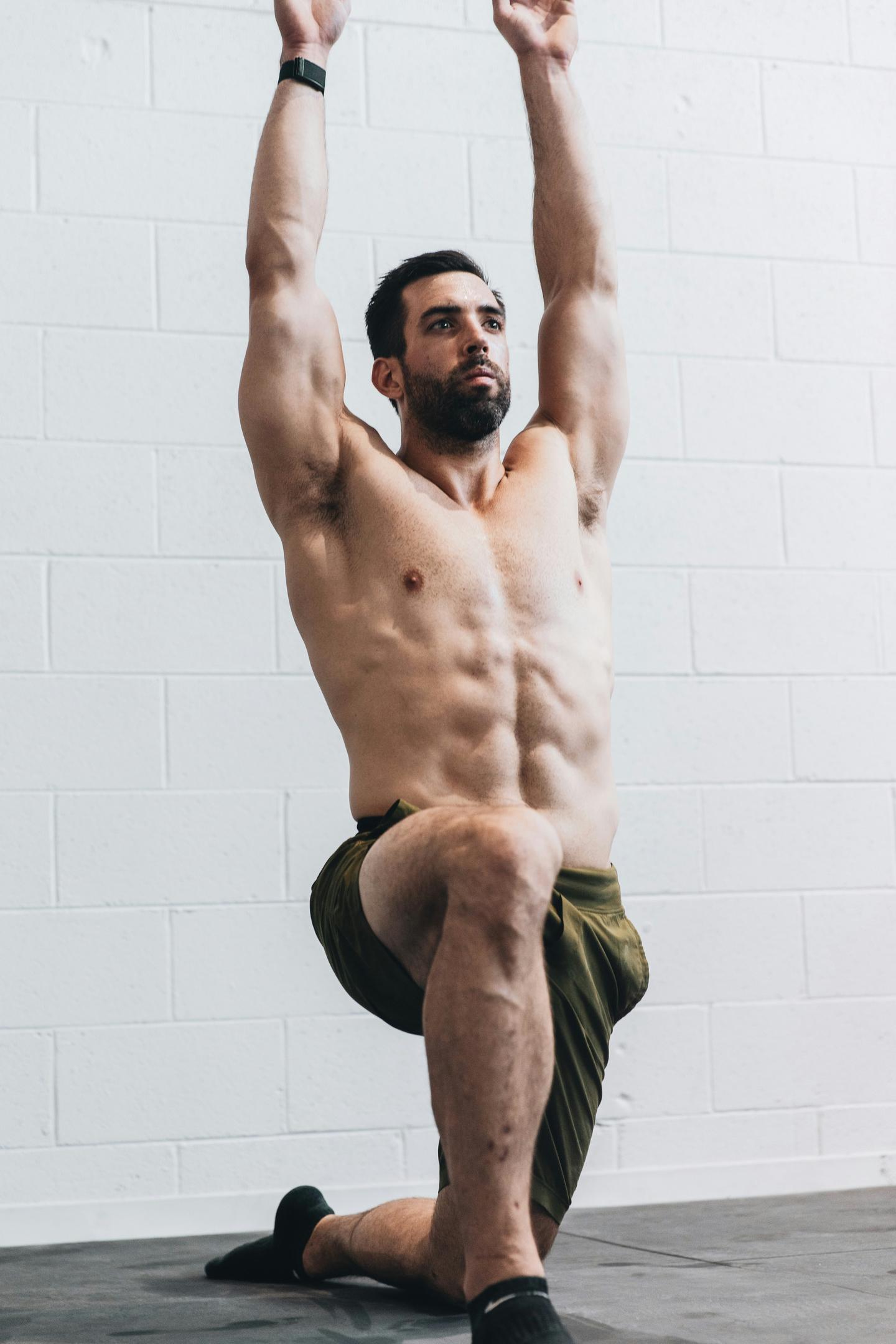
For some people, they realize that their hips are especially tight, and spending some extra time foam rolling or going through some active pigeon, spiderman, and bootstrappers is especially helpful.
For other people, maybe they had a previous injury, such as a shoulder tear in their labrum or rotator cuff. If this is the case, additional time will need to be spent on shoulder warm-ups, certainly more than someone without a prior injury. And for those of you lucky enough to have avoided most injuries, injury prevention is a great reason to take your workout stretching seriously now.
A great way to improve your odds of staying out of physical therapy and improve flexibility is by making sure each workout starts with a solid warm-up.
How should I stretch before a workout?
Alright, to finish, let’s look at two different scenarios and how you could warm up in each situation.
First, a heavy leg day. Squats, split squats, hamstring curls, the whole shabang.
As a note, many people warm up in many different ways; my goal here is to give you a good general starting point.
Warm-Up (~10-12 min.)
5:00 min bike
1:00 downward dog, upward dog transition (pedal feet one leg at a time in downward dog for calf muscles stretch, hips forward on the upward dog)
1:00 spiderman stretch with rotation (alternate leg forward)
-
Starting position: left foot and left knee forward, right knee straight, rotate away from leg with opposite arm. Next, other leg forward (right foot and right knee), rotate away with left arm.
:30 plank
1:00 alternating pigeon stretch (:05-10 seconds each side, left leg/right leg)
10 glute bridges
5 single-leg glute bridges (left leg/right leg, one knee bent, other leg straight)
:30 plank
5 bootstrappers (feet shoulder width or feet hip width apart)
5 slow air squats
Specific Warm-Up
5 barbell RDLs
5 barbell squats
5 barbell RDLs
5 barbell squats
Second scenario: Full body lift. Bench press, bent over rows, lunges, RDLs, situps.
Warm-Up (~10-12 min.)
5:00 min bike (or other form of cardio)
:30 downward dog, upward dog transition
:30 alternating spiderman stretch with rotation
:30 plank
10 banded pull-aparts
:30 alternating pigeon stretch (:05-10 seconds each side)
5 scapular push-ups (starting position: high plank/pushup)
10 reverse lunges (left leg/right leg)
5 slow push-ups (3 seconds down, 1 second pause, if able)
5 bootstrappers (feet shoulder width or feet hip width apart)
5 slow banded good mornings (3 seconds down, 1 second pause, legs straight with slight knee bend)
10 banded pull-aparts

Specific Warm-up
10 empty barbell bench press
:30 arm circles (dynamic shoulder stretch)
Build up to the first set of bench press
With this workout being full body, I would go into each set and pick a moderate weight to be a warm-up set, then go into your working sets. You should be pretty warm after finishing up the bench press.
Honestly, the key to a great warm-up (stretching included) is to make sure you are warm (increase muscle temperature). You should be beginning to sweat; a dynamic warm-up will help here. You should also be sure you have addressed any previous injuries or mobility limitations with your stretching exercises. If you do these two things, you are going to eliminate many of the issues that come from rushing through warm-ups or skipping them entirely in your fitness journey.