Setting up a small training facility is a different challenge than building a home gym. The equipment needs to handle more users, more volume, and more varied training than a personal setup does. It needs to stay tight, stay safe, and keep functioning without needing constant attention. And it usually needs to do all of that in a space that is not as large as a full commercial gym floor.
The rack is almost always where this challenge is most visible. It is the centerpiece of any serious strength training space, and the decisions you make around it shape what training is possible and how safely that training happens. Here is what we look at when helping small facility owners choose the right rack.
Why Commercial Grade Matters More in a Facility Context

A rack in a home gym might see one person training five days a week. A rack in a small training facility might see eight to twelve people per day across multiple sessions. That difference in use volume compounds quickly over the life of the equipment.
Residential racks are built to lighter specifications because their expected use is lighter. Commercial-grade racks are built to sustain heavy loading from multiple users over years of daily operation. The difference shows up in steel gauge, weld quality, upright squareness under load, and the precision of the J-hooks, safeties, and attachment points.
For a facility setting, buying to commercial specification is not optional. A rack that develops flex, wobble, or alignment issues in a single-user home gym is an inconvenience. The same problem in a facility with multiple users and varied training loads is a safety issue.
Understanding Rack Types and What Each Suits
Not every rack is the right choice for every facility. The main categories worth understanding:
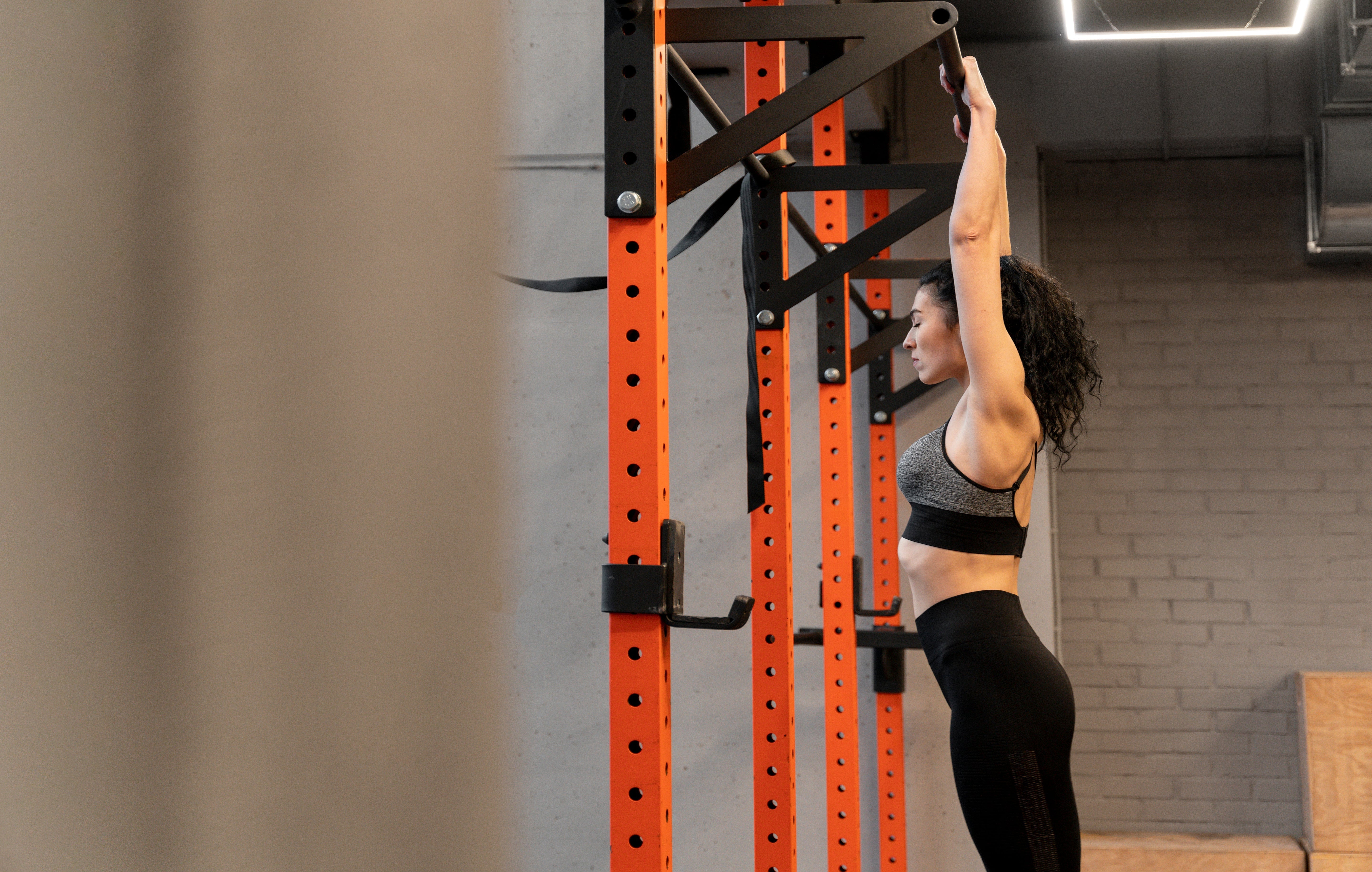
- Full power rack or power cage. Four uprights, four-sided enclosure, integrated safety arms or spotter catchers. This is the most stable configuration available and the best choice for facilities where heavy barbell training is the primary activity. Powerlifting-focused setups, strength and conditioning programs, and spaces where users will frequently be training without a spotter all benefit from a full cage format.
- Half rack. Two uprights with a rear foot for stability, open on three sides. More space-efficient than a full cage, still handles significant loading. A good choice for facilities where floor space is limited but training volume is high. Works well alongside other rack stations in a row configuration.
- Folding squat rack. Wall-mounted, folds flat when not in use. The folding squat rack is increasingly common in small facilities because it allows the training space to serve multiple purposes. When a client is not using the rack, it folds against the wall and frees up the floor for other movement. The trade-off is that it requires solid wall mounting and a properly anchored structure to perform safely under heavy loading. It is not the right choice for every wall type or every building.
- Multi-rack or functional rig. Multiple bays connected in a single structure. Works well for facilities running group training sessions where multiple athletes need to work simultaneously. The connected structure adds rigidity and stability. Requires more floor space and a more deliberate layout plan.
What to Check Before You Buy
Regardless of rack type, these are the specifications worth evaluating carefully before committing to a purchase:
- Steel gauge. Heavier gauge means more rigidity and less flex under load. Commercial racks are typically built with 11-gauge or thicker steel. Thinner gauges are a sign the rack is built to residential or light-commercial specifications.
- Weight capacity rating. For a facility setting, look for a power rack or squat rack rated to at least 1,000 pounds. Verify the rating against the heaviest loading your programming will require, not just your current client base.
- Upright hole spacing. 1-inch spacing in the bench press zone gives more precise bar height control. Standard 2-inch spacing works well for most applications. Confirm the spacing works with the training modalities you are programming.
- J-hook and safety arm quality. These are the components that interact with the barbell most directly. They should lock securely into position without wobble and be rated to match the rack's overall capacity. Cheap J-hooks on an otherwise solid rack are a weak link worth addressing.
- Floor anchoring requirements. Most commercial-grade racks are designed to be bolted to the floor for maximum stability. Confirm the anchor pattern before installation and verify that the floor can handle it. Concrete is the standard base for a bolted rack. If your facility has a floating floor or wood subfloor, discuss anchoring requirements with the manufacturer or your installer.
New vs. Used for Small Facilities

The used commercial rack market is worth exploring seriously for small facility owners. Racks from well-known commercial brands, including power cages and half racks from facilities that have upgraded or closed, are frequently available at pricing significantly below new retail cost. The structural components of a commercial rack, primarily heavy steel with welded construction, hold up extremely well over time. Cosmetic wear is normal. Functional degradation is rare when the rack has been maintained.
At Freedom Fitness Equipment, we source and carry used commercial-grade racks including power cages and folding squat rack configurations when available in inventory. We inspect the welds, check the J-hook function, confirm the safety arm alignment, and disclose condition accurately before anything goes out. If you are outfitting a small facility and want to stretch your budget without compromising on build quality, used commercial is often the most practical path.
The Bottom Line
For a small training facility, the right rack is the one that handles your training volume safely, fits your floor plan practically, and holds its structural integrity over years of consistent use. Get the specification right, and the rack becomes a long-term asset. Cut corners on it, and you will be replacing it sooner than you should.