Cardio equipment has a reliability problem. Not mechanical reliability, though that is a real issue with certain categories. The bigger problem is that most cardio equipment in home gyms gets used consistently for about three months and then gradually turns into an expensive clothes rack. The treadmill that seemed essential in January becomes furniture by April.
Indoor cycling does not have this problem at the same rate. The utilization numbers on exercise bikes in home gym environments hold up longer than almost any other cardio category, and it is worth understanding why before deciding whether a bike belongs in your setup.
Why Indoor Cycling Holds Up as a Long-Term Habit
The most sustainable cardio equipment is the kind you can use without committing to a long session. A treadmill at a useful training intensity requires a warm-up, a sustained effort, and a cool-down. A rowing machine requires technique. An elliptical requires enough space to use it properly and enough motivation to get on something that never quite feels natural.
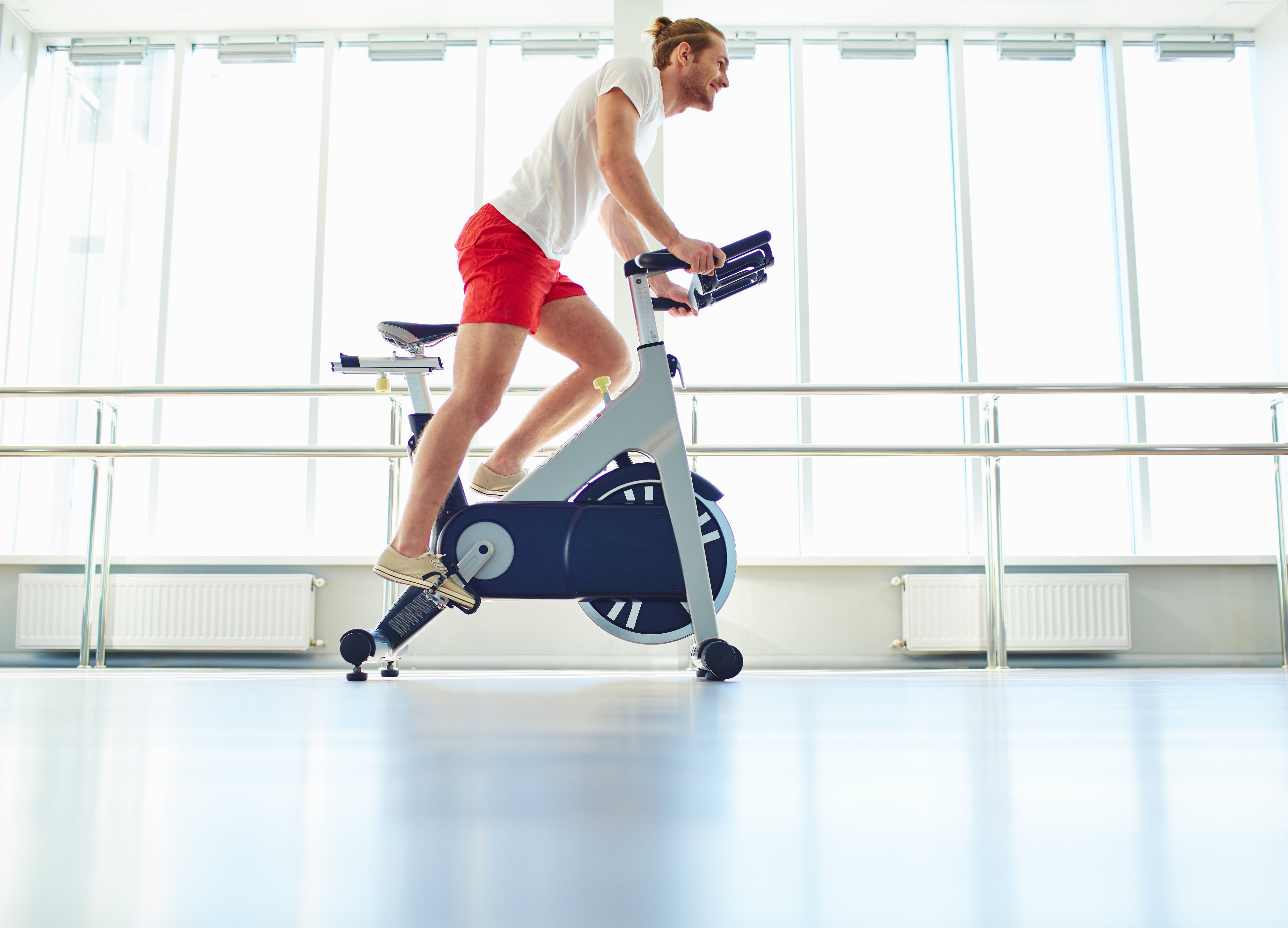
A spin bike or air bike can be used for three minutes between strength sets, thirty minutes of steady-state work, or a dedicated interval session. The flexibility of use, from a quick warm-up to a full conditioning workout, means it serves more training sessions across more contexts than most other cardio tools.
It also requires very little setup. Adjust the seat height, clip in or plant your feet, and start pedaling. That low barrier to entry matters more than most gym builders expect. Equipment that requires a ritual to use tends to get used less.
The Main Types Worth Considering
Not every exercise bike serves the same training purpose, and choosing the wrong format for your goals is one of the more common cardio equipment mistakes. Here is how the main categories break down:
- Spin bikes. Designed for cycling-style training with a weighted flywheel, a forward-leaning riding position, and resistance controlled by a manual dial or friction mechanism. A spin bike is built for sustained output, intervals, and climbing simulations. The riding position and feel are closer to road cycling than any other format, which makes it a strong choice for cyclists training indoors and for anyone whose primary goal is building cardiovascular endurance through structured sessions. Resistance is smooth and predictable, and the flywheel carries momentum through each pedal stroke in a way that rewards a consistent cadence.
- Air bikes. Resistance is generated by a large fan, which means the harder you pedal, the more resistance you face. There is no upper ceiling and no resistance dial to manage. An air bike is the right choice for high-intensity interval training, full-body conditioning work, and short, demanding efforts that leave you genuinely spent. The simultaneous arm and leg drive engages the upper body more than the spin bike, which raises the cardiovascular demand per unit of time. For strength athletes who want efficient conditioning without adding significant training volume, an air bike is often the most practical single cardio tool available.
- Upright and recumbent bikes. Lower intensity options that work well for warm-ups, recovery sessions, and users managing joint issues. Less suited to serious training but practical in commercial environments and for general fitness goals.
What to Look for in a Bike Built for Real Use

The gap between a quality exercise bike and a cheap one shows up quickly under consistent training. Here is what to prioritize when evaluating options:
- Frame stability under load. At high output, a bike with a light frame will rock and flex in ways that affect the training experience and accelerate wear. Commercial-grade frames are built to stay rigid through hard efforts.
- Drivetrain quality. Cheap bikes develop mechanical noise, inconsistent resistance feel, and drivetrain wear within a year of serious use. A quality flywheel or fan mechanism on a commercial-grade bike maintains its feel across years of heavy use.
- Seat and handlebar adjustability. Multiple adjustment points allow a wider range of users to find a proper fit, which reduces injury risk and makes longer sessions more sustainable.
- Console accuracy. If you are training by watts, calories, or heart rate, the console needs to give you reliable data. Budget bikes are frequently inaccurate in ways that make training by metrics impossible.
- Maintenance requirements. Commercial-grade bikes are built with longer service intervals and more durable components than residential alternatives. For a home gym setting where the bike sees one user daily, a commercial-grade machine will require almost no maintenance over its lifetime.
New vs. Used for Indoor Cycling Equipment
Used commercial indoor cycling equipment represents one of the best value propositions in the entire gym equipment market. Bikes from brands like Life Fitness, Star Trac, Keiser, Precor, and Matrix are built to sustain thousands of hours of commercial use. When they age out of a hotel gym or health club, they still have substantial useful life ahead of them and are often available at a fraction of their original retail price.
At Freedom Fitness Equipment, we carry both new and used cardio equipment including spin bike models, air bikes, and upright bikes across a range of brands and price points. Condition is always disclosed clearly. Used commercial bikes go through a check before they are listed, and we are straightforward about any wear.
Whether you're setting up your first home gym or adding cardio to an existing strength setup, we can help you find a bike that fits the training, the space, and the budget. Reach out to the team or browse our exercise bikes collection to see what is currently in stock.