We all know the benefits of training and working out - things like increased muscle mass, decreased fat, strength gains, improved cardiovascular function, improved mood and confidence, mental clarity and resilience, and that’s honestly just the start.
However, one area that is often not talked about is improving your ability to defend yourself and those you love. Now, to be fair, training only for aesthetics or solely for strength will only get you so far. There’s a reason they say, “The bigger they are, the harder they fall.” Although, training solely for either of these two will likely help you avoid any conflicts due to sheer intimidation.
Nonetheless, it is recognized that true self-defense is a skill, just like snatching, sprinting, and dialing in your back squat. In order to hone that skill, it must be trained. I recently watched a video of Chris Bumstead (the greatest bodybuilder of this generation) sprinting, and it was rough. Now, Chris is ELITE at bodybuilding; there’s an argument that no one has been better than him ever; however, sprinting was something he never did, and it clearly showed. My point here is that at some point, it doesn’t matter how fit, strong, or fast you are; someone with better technique can beat you.
Now this isn’t meant to scare you, but to point out the need for including, at least occasionally, self-defense courses or classes in your life.
So, to start, let’s look at a few of the most common types of self-defense classes you will see.
Types of Self-Defense Classes
One note here, self-defense is multifaceted. For the purpose of this article, we will be talking about fitness-related self-defense courses or classes. Of course, there are self-defense seminars for avoiding conflict, using pepper spray, and defending yourself as an armed citizen.
Those are great forms of self-defense, and the self-defense seminars are great; however, they won’t be the focus of this article.
Mixed Martial Arts
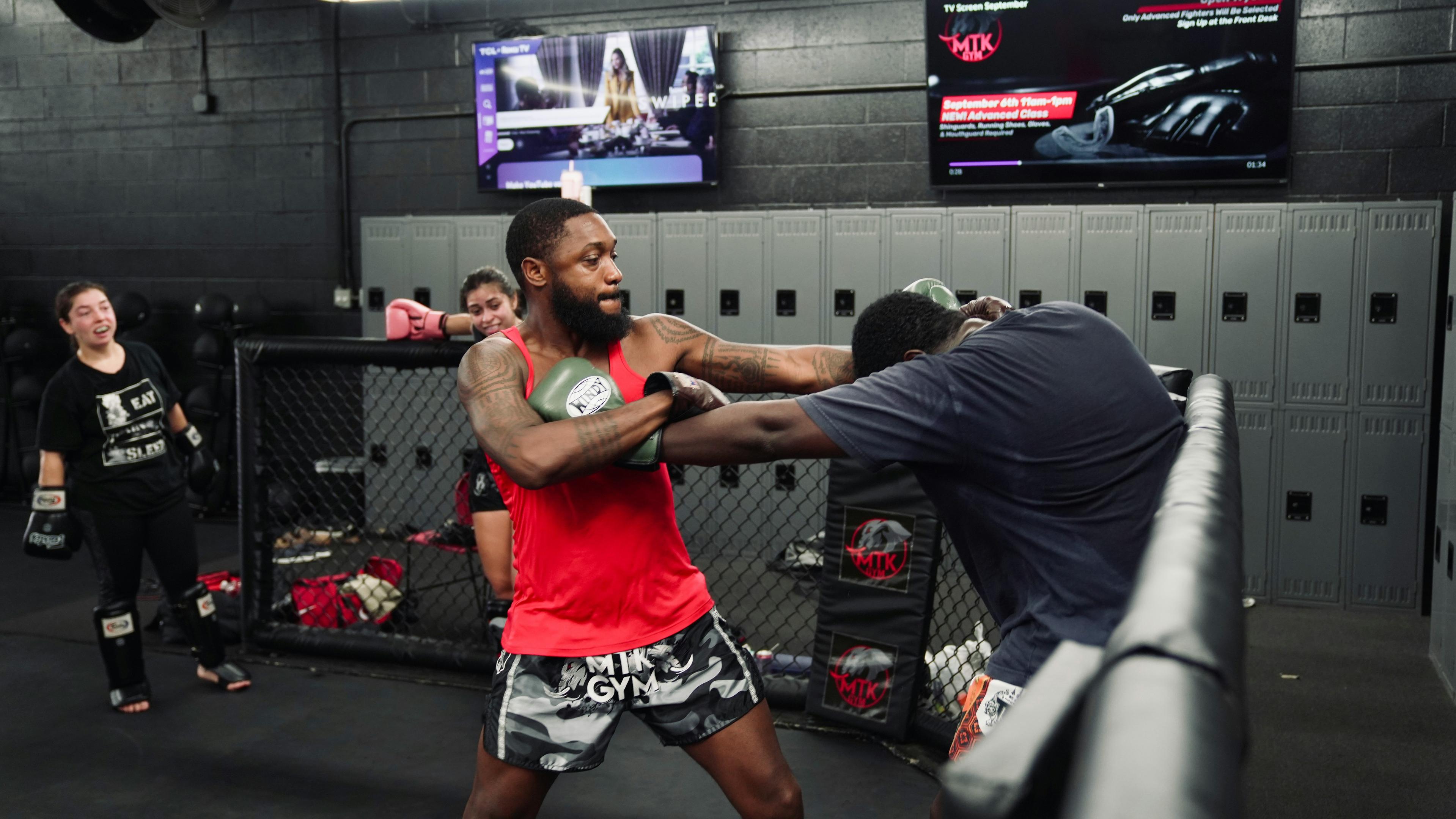
Mixed Martial Arts (MMA) is the style of combat used in the UFC. If you’ve seen fights involving Conor McGregor, Ronda Rousey, or Jon Jones, you’ve seen MMA in action.
MMA is a relatively new sport; however, its origins go all the way back to Ancient Greece, with the first contest believed to be in 650 BC. The modern origins of MMA stem largely from Brazilian Jiu-Jitsu and the Gracie family. This family believed that BJJ was the most effective form of fighting and challenged any fighter to come test out their skills against them. Ultimately, this led to the establishment of the UFC in 1993. At the time, it was a barbaric, everything goes organization. Today, there are many more restrictions and rules, but it is still a brutal combat sport.
Now, MMA training for self-defense looks much different than stepping into the octagon across from Jon Jones. So what are the key elements of training for MMA?
MMA primarily involves four main combat disciplines: Brazilian Jiu-Jitsu, Boxing, Wrestling, and Muay Thai.
Essentially, MMA (Mixed Martial Arts) is a mixed bag of martial arts. Some MMA events involve high amounts of wrestling and BJJ (ground-based fighting), while other events involve a lot more combat on two feet (Boxing and Muay Thai).
One of the really good things about training for self-defense with MMA classes is that you will get exposed to many different fighting styles and situations. This is great because you truly never know what self-defense will look like; you really need to be prepared for it all.
While we are here, I think it is important to note that there is a huge difference between training for MMA and competing in MMA. Training for MMA builds your skills, confidence, and fitness with much fewer negative long-term consequences; however, competing in MMA is signing up to compete in a brutal, violent sport with serious head and limb injury risk.
Brazilian Jiu-Jitsu
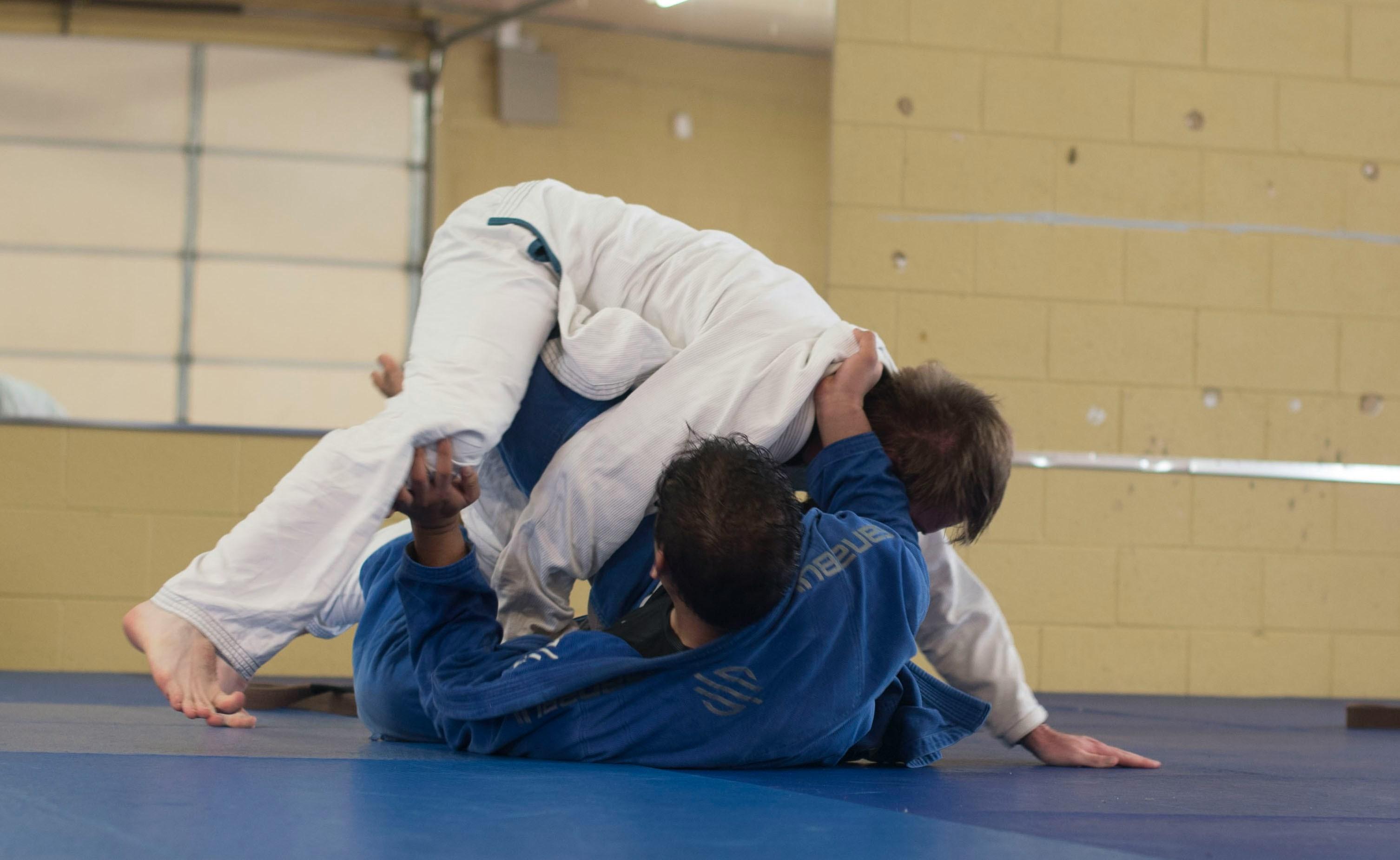
Brazilian Jiu-Jitsu is a ground-based combat sport. Its origins come from the Gracie family, who were taught by a Japanese Jiu-Jitsu master named Mitsuyo Maeda. As mentioned above, the Gracie family taught and grew BJJ to the MMA scene, where it has become even more popular, especially in the US.
BJJ prides itself on preparing smaller, weaker athletes to be able to control a larger, stronger athlete. The sport is built on the idea that by obtaining superior grips, leverage, and positions, self-defense is possible, even if the athlete is not at a physical advantage. In order to get the opponent to submit, BJJ teaches that it is much easier to control an opponent on the ground. Thus, the first step is getting your opponent to the ground. The sport relies heavily on knowledge of the human body and its limitations.
BJJ is a great sport for self-defense. It is centered around defending yourself even when at a disadvantage. In training, there is generally no throwing kicks or punching, eliminating a lot of the injury risk, but preserving the skill of learning self-defense. This sport has really taken off recently in the United States, whether that be from the rise of the UFC, people looking for a great way to learn self-defense, the safer appearance of the sport when compared to other martial arts, or even Joe Rogan’s ringing endorsement.
Maybe reading this is your first step on a journey to a black belt?
But for real, how sick would a BJJ black belt be?
Krav Maga
Krav Maga was originally created for the Israeli army in the 1950s as a means of self-defense. Unlike almost all other forms of martial arts, Krav Maga isn’t a sport. They’re aren’t really dedicated competitions. The purpose of practicing Krav Maga, according to its founder, is so that “One may walk in peace.” This is achieved largely by understanding basic self-defense and practicing self-defense techniques and situational awareness often.
Training in Krav Maga is not only about how to defend yourself, but it's also about how to avoid scenarios where you will need to defend yourself. Physical defense is viewed as almost a last resort, but absolutely necessary in certain situations. They want the average person to be an expert in risk reduction so physical conflict can be avoided.
In a Krav Maga self-defense class, you will likely learn how to deal with headlocks, chokes, and other forms of attacks. You will learn proper stances, striking positions, and weakness points of your opponent. You will also learn how to handle scenarios when your opponent has a weapon. All of this is done in stressful scenarios to help truly prepare you to be able to defend yourself and those you love in almost any situation.
Those who train Krav Maga are looking to avoid compromised situations, de-escalate them if they encounter one, and defend themselves and their loved ones if needed. This is less of a sport and more of a focus on self-defense.
Muay Thai
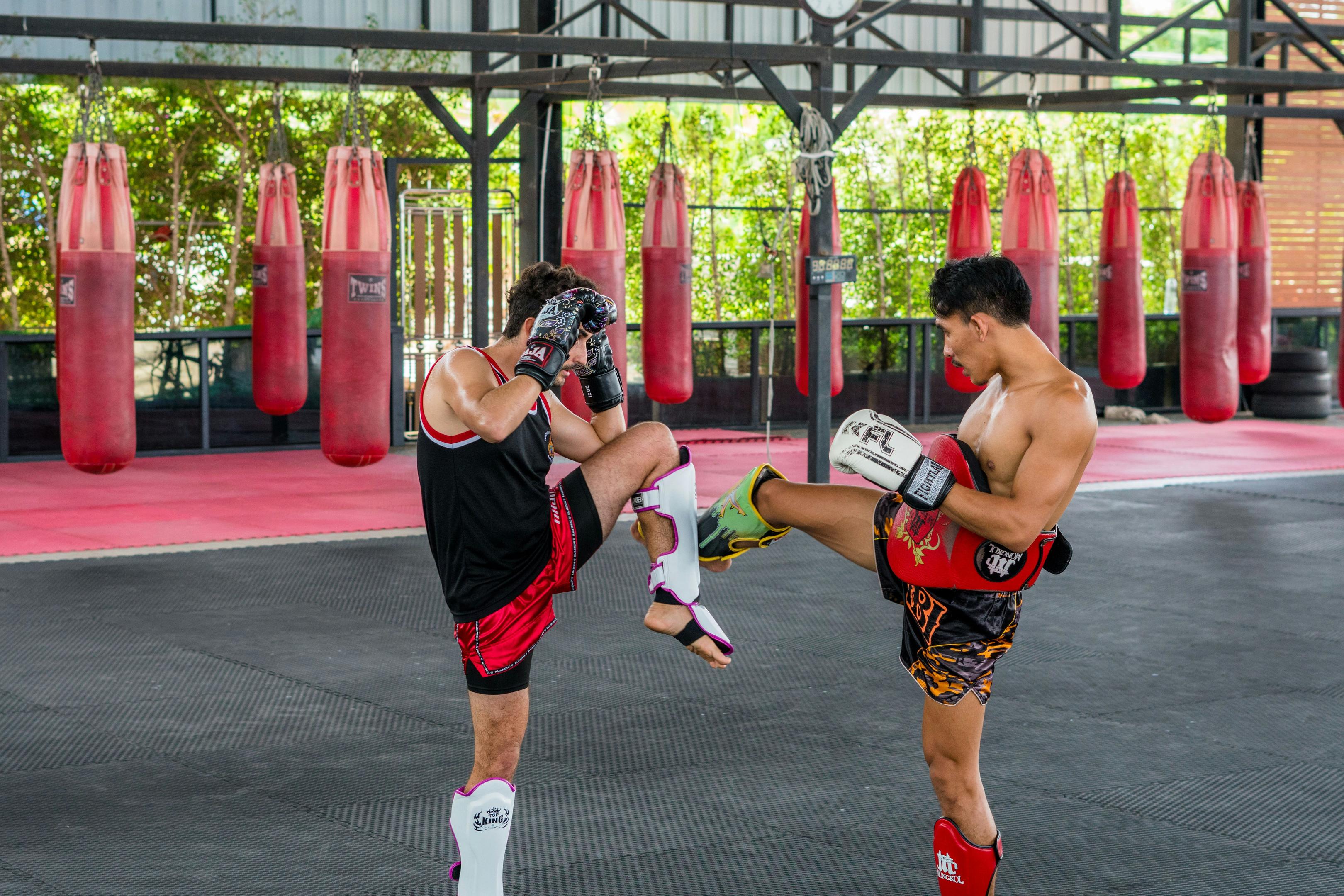
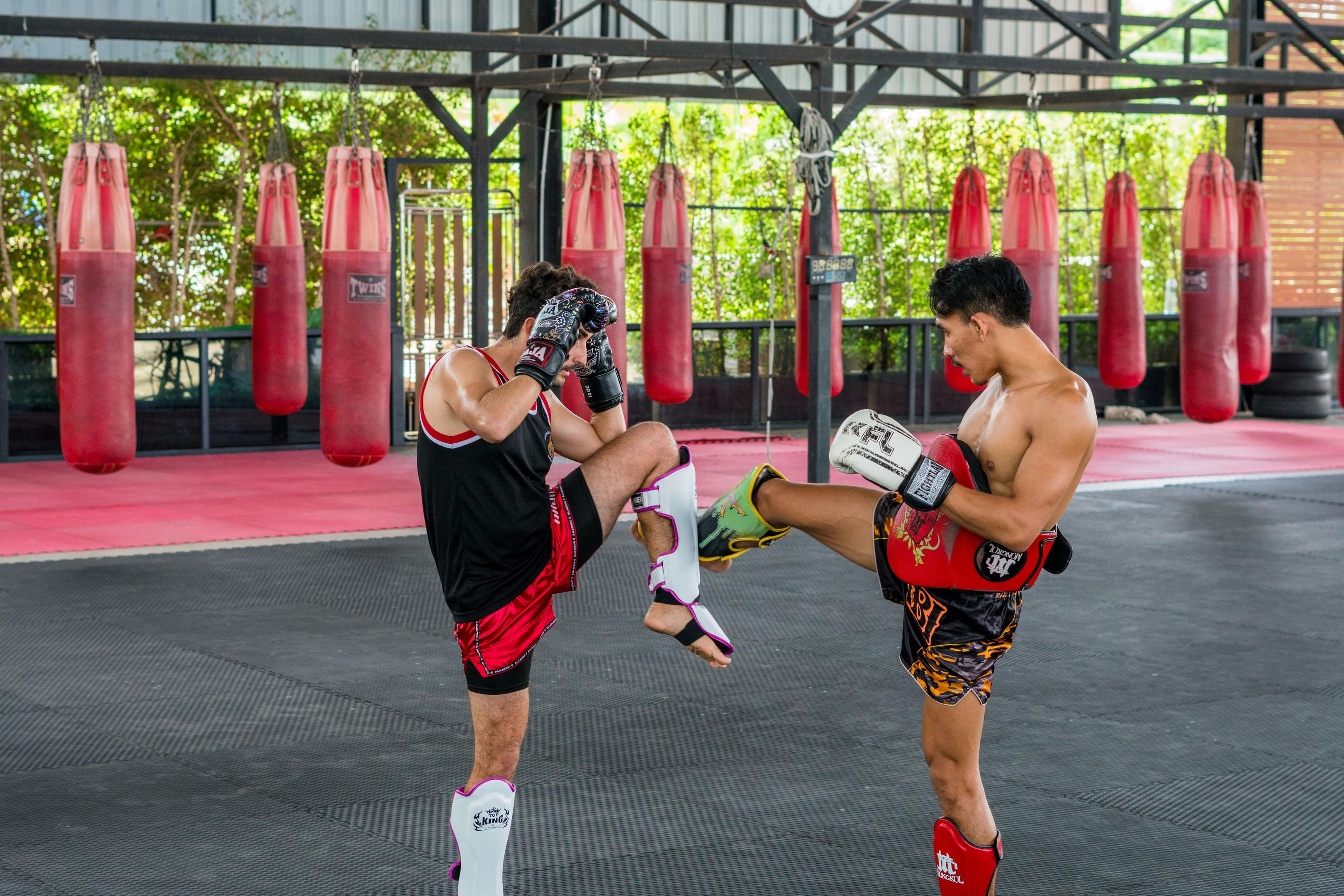
Muay Thai (or Thai Boxing) is the national sport of Thailand. Although the name translates to Thai boxing, it is much more similar to kickboxing. Muay Thai is a stand-up combat sport, where athletes throw kicks, punches, elbows, and knees.
Muay Thai, as mentioned above, is a key discipline in MMA.
Its history can be traced back to about the 13th century when it was taught to the Thai army.
If you are looking for a full-body self-defense striking workout, this may be more your speed. As opposed to BJJ, you will be upright for the entire class. You will learn how to defend against and deliver kicks, punches, elbows, and knees to defeat your opponent. The only equipment needed for Muay Thai is a pair of gloves, athletic clothes, and headgear. Of course, that differs slightly from the sport, but is largely similar.
Muay Thai resembles a fight you may encounter in self-defense, well, at least initially. Many fights will eventually end on the ground. For this reason, Muay Thai is certainly important, but so is BJJ. As you can see, each of the four disciplines discussed has its place in teaching you how to properly defend yourself and your family members in a compromised situation.
Alright, now that we’ve looked at a few of the most popular self-defense classes and training available, let’s now look at some of the key benefits of training for self-defense.
First, benefits for your health.
Benefits of Self-Defense Classes for Your Health
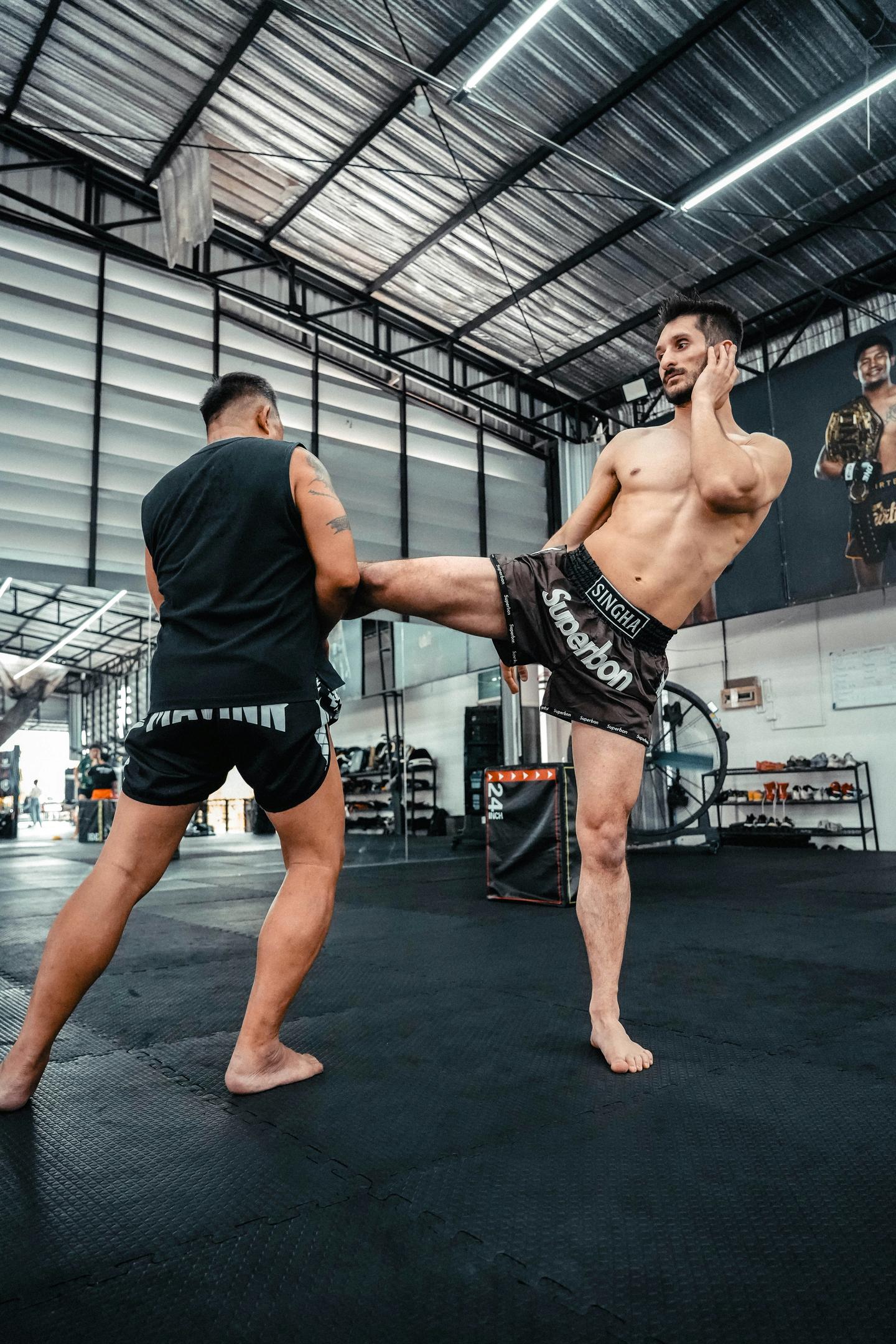
So at this point, you probably realize that competing in any of the above sports is not for you, well, honestly, except maybe BJJ. With Muay Thai and MMA, you may end up with a slightly disfigured face or worse. However, the training that goes on to prepare the professionals and the training you will receive in a self-defense class still follow similar patterns.
Now, of course, the professional fighters go through much longer, more intense training, but there is still a certain level of fitness, skill, conditioning, and strength that is developed by training like a combat athlete.
So what do these classes typically look like?
This certainly depends on the self-defense discipline you embark on. No doubt a Muay Thai class in Thailand and a Krav Maga class in the United States will look very different. However, overarchingly, you should expect to see some common themes.
#1) A focus on technique
This is great for your health because proper technique ensures injuries are limited. It also allows you to develop and improve faster. Taking time to learn the proper technique is critical to being proficient in self-defense situations.
#2) Interval-based training
Almost all combat sports follow some sort of work-to-rest ratio. This varies considerably throughout disciplines, but you can expect to spar or practice for x number of minutes, followed by a rest period and then repeat. Interval-based training is one of the best ways to improve your endurance, VO2 max, and cardiovascular system. This is one of the reasons training in a self-defense class can be so brutal. Interval-based training can truly kick your butt. There’s a reason that CrossFit (and all the pain it can bring) named a workout “Fight Gone Bad” in order to simulate the pains of a fight in training.
#3) Skill development
Learning a new physical skill is great for your brain health and physical health. You are increasing your coordination and ability to move your body in ways not used before. Typically, with physical skill development, there comes a need for additional mobility and finding new ways to move your body. This is great for your overall health.
#4) Muscle endurance
Self-defense programs or classes are going to test your muscular endurance. If you do them enough and in the right manner, your body at some point will be burning - muscles, lungs, the whole thing. It's in those moments that your muscles are being pushed, but also, probably even more important, your mind is being tested as well. At the end of the day, self-defense classes are typically great workouts. Workouts that will help keep you healthy for a long time.
One area you may be lacking if you only take self-defense programs or classes is muscle strength. You will get some of that, but be sure to incorporate some squats, lunges, pull-ups, pressing movements, etc., if your classes don’t already.
Benefits of Self-Defense Classes for Your Safety
Self-defense programs or classes are no doubt a great workout; however, the biggest added benefit is that they could truly save your life. Now, of course, exercise can actually save your life as well (preventing the onset of obesity, chronic disease, etc.), but that is a gradual process. Self-defense programs or classes will also prepare you should you need to defend yourself or your family members in a moment.
Now, we all hope that day never comes. But, we also know the old cliche, “Better safe than sorry.” The way I see it, we all need to work out in some capacity. Why not make at least a few of those workouts every month or two, self-defense programs, or classes? You never know just how valuable the hands-on training could be until you need it. Also, many gyms offer free programs or trials, so be sure to try out a few different styles to see which hands-on training is best for you.
One final note, many gyms offer women's self-defense programs.
A women's self-defense program is a very important fitness class for any female to take. Men are naturally stronger, and it is awful when that strength is used for evil and not good. One way to combat that is a women's self-defense program. Be sure to check around to see if a gym near you offers a women's self-defense program. Also, be sure to carry pepper spray.
Sources
Danaher, John. “What is Brazilian Jiu-Jitsu (BJJ)? – Renzo Gracie Academy.” Renzo Gracie Academy, https://renzogracieacademy.com/about/what-is-brazilian-jiu-jitsu-bjj/.
“The History And Evolution of MMA.” Diaz Combat Sports, 22 May 2020, https://diazcombatsports.com/2020/05/the-history-and-evolution-of-mma/.
Saipe, Taylor. “10 Most Practiced Martial Arts Disciplines.” Made 4 Fighters, 28 May 2024, https://made4fighters.com/blogs/beginner-guides-1/most-popular-martial-arts?srsltid=AfmBOoqh1jLTan1kNINC5tVYMC246bXFpRgZb_2LLkw1H8pqyt-sBGuI.
“What is Krav Maga?” Tactica Krav Maga Institute, https://www.kravmagainstitute.com/self-defense/what-is-krav-maga/.
“What is Muay Thai? - Muay Thai History & Origin.” YOKKAO, https://yokkao.com/pages/muay-thai-history.