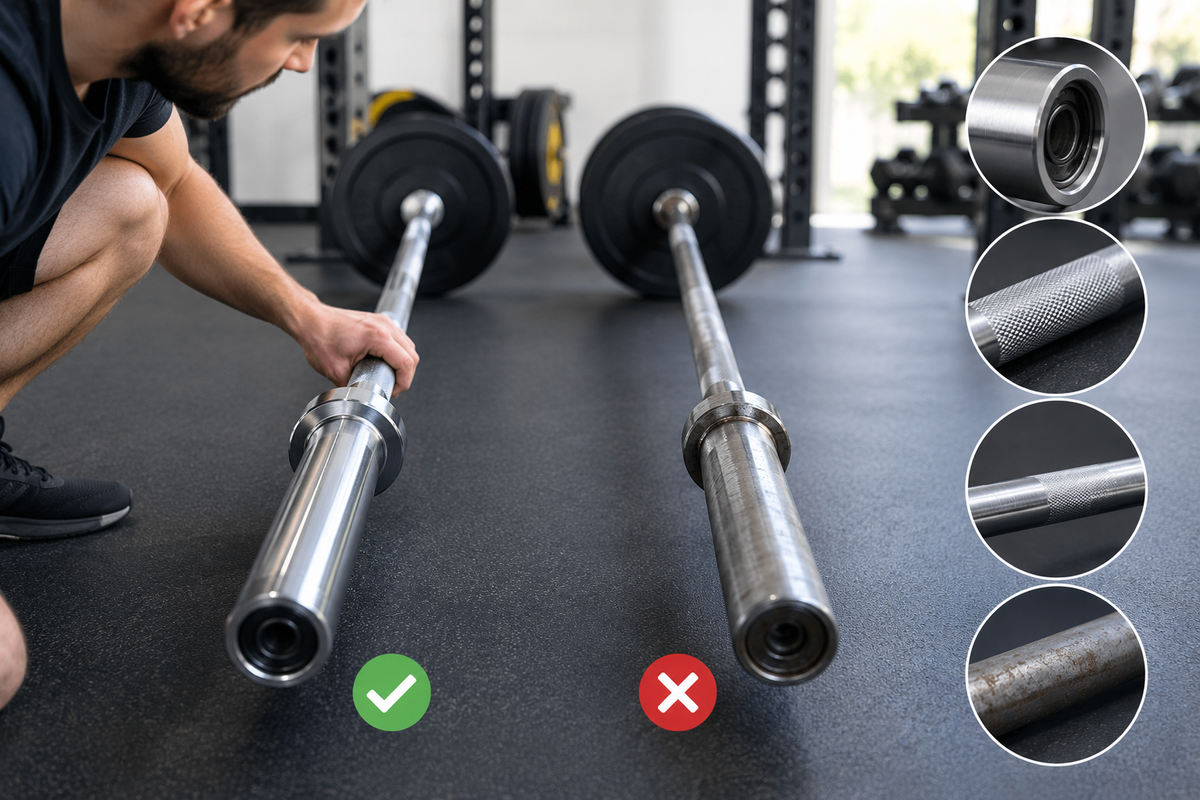
The bar is the piece of equipment you have your hands on every session, and it is often where people trim the budget. It is a common pattern. Someone spends carefully on a rack, then buys a bar from a marketplace listing with no specifications attached, and over time the sleeves stop spinning freely, or the shaft develops a bend that does not come out. Here is what to look at before you spend anything.
Start With the Basic Dimensions
A men's bar is seven feet long and weighs forty-five pounds. A women's bar is shorter with a smaller diameter shaft, which makes a noticeable difference for smaller hands and is worth handling before you decide. The sleeves need to be two inches to take standard plates.
If a listing does not state length, weight, and sleeve diameter, that is worth noticing. A proper Olympic barbell has those numbers published, because the manufacturer knows them and buyers ask.
What Tensile Strength Tells You
Tensile strength describes how much force the steel takes before it deforms permanently. It tends to be the difference between a bar you keep for twenty years and one you replace, and it is usually listed in PSI or as a weight capacity rating.
You want a bar rated comfortably above any barbell weight you will realistically load. Our seven-foot men's bar carries a seven hundred pound rating, which is more margin than most lifters will use. When a rating is not published at all, it is reasonable to ask why before ordering.
Knurling Depends on How You Train
Knurling is the crosshatch pattern cut into the shaft to give your grip something to hold. Aggressive knurling helps on heavy pulls and can be rough on your hands during high-rep work. Passive knurling is more comfortable for volume, though it offers less security when the bar is heavy and your hands are sweating.
There is no correct answer here, only the one that matches your training. If you pull heavy, more aggressive knurling is worth having. If you do a lot of conditioning work with the bar, a passive knurl is usually the better fit, since the barbell weight on those sets is rarely what limits you.
Center knurling is a separate question. It helps the bar hold position on your back during squats and can scrape your neck during cleans, which is why some bars include it, and some leave it off. If you squat heavy and rarely clean, it is worth having.
Bushings or Bearings
Sleeves need to spin. Without rotation, the force from a turning bar travels into your wrists and elbows during cleans and snatches.
Bushings are simpler, more durable, and work well for general strength training. Bearings spin faster and more smoothly, which matters for the speed of a clean or a snatch, and they cost more to build.
For most home and commercial strength work, a well-built bushing bar is the sensible buy, and the difference in price is usually better spent on plates.
The Bars We Keep in Stock

Different lifts call for different bars. This is the range we find covers most people:
- A seven hundred pound rated seven foot forty five pound bar for general strength work
- Men's and women's zinc-plated cross-training bars for mixed-modal training
- A commercial-grade EZ curl bar for arms and pressing variations
- An open hex trap bar for deadlifts, carries, and anyone working around back issues
- A safety squat bar rated to a thousand pounds for squats when shoulder mobility is limited
Most home gyms are well served by one good general bar to start with. The specialty bars earn their place once you are training around a limitation or running specific variations regularly, and they are easier to justify as an addition than as a first purchase.
Blemished Bars Are Worth Considering
A blem bar has a cosmetic flaw from manufacturing. A mark in the finish, a slight inconsistency in the coating, the kind of thing you notice on a shelf and stop noticing once the bar is loaded.
Structurally, it is the same Olympic barbell at a lower price, with the same rating and the same knurl. We stock blems because plenty of our customers would rather put the savings toward plates than toward a flawless zinc finish. If how the bar performs matters more to you than how it looks on a shelf, it is worth a look.
Basic Care and Storage
Bare steel bars will rust if they are left alone, particularly in a humid garage or an unheated basement. A few habits cover most of it.
Brush the shaft with a nylon brush after chalky sessions to clear chalk from the knurling. Keep a light coat of oil on bare steel. Store the bar horizontally on a rack rather than standing it upright in a corner, where the shaft can take a slow bend under its own weight over time.
Zinc and other coated finishes need less attention, though none of them do well left wet. If the bar gets damp, wipe it down before putting it away.
Buy the Bar Once

Most people who spend properly on a bar are glad they did, and buying the cheapest option may mean buying a second one sooner than planned. Check the published specifications, match the knurl to the training you actually do, and choose a rating with real headroom above what you lift.
None of this requires an expensive bar. Freedom Fitness Equipment stocks new and used commercial grade bars at our Charlotte, NC location and ships nationwide, and we are happy to talk through which one suits how you train. Call us at 980.216.4860, or come and handle a few in person, which is usually more useful than any specification sheet.