Walk into any serious training facility, and the rack is the centerpiece of everything. It determines what movements are possible, how safely those movements can be performed, and how efficiently the space can be used. Two rack formats consistently come up in conversations with home gym builders and small facility owners: the power rack and the folding squat rack. They are not interchangeable, and choosing the wrong one leads to either a rack that dominates the space or one that cannot support the training you are planning.
What a Power Rack Is and Who It Is Built For
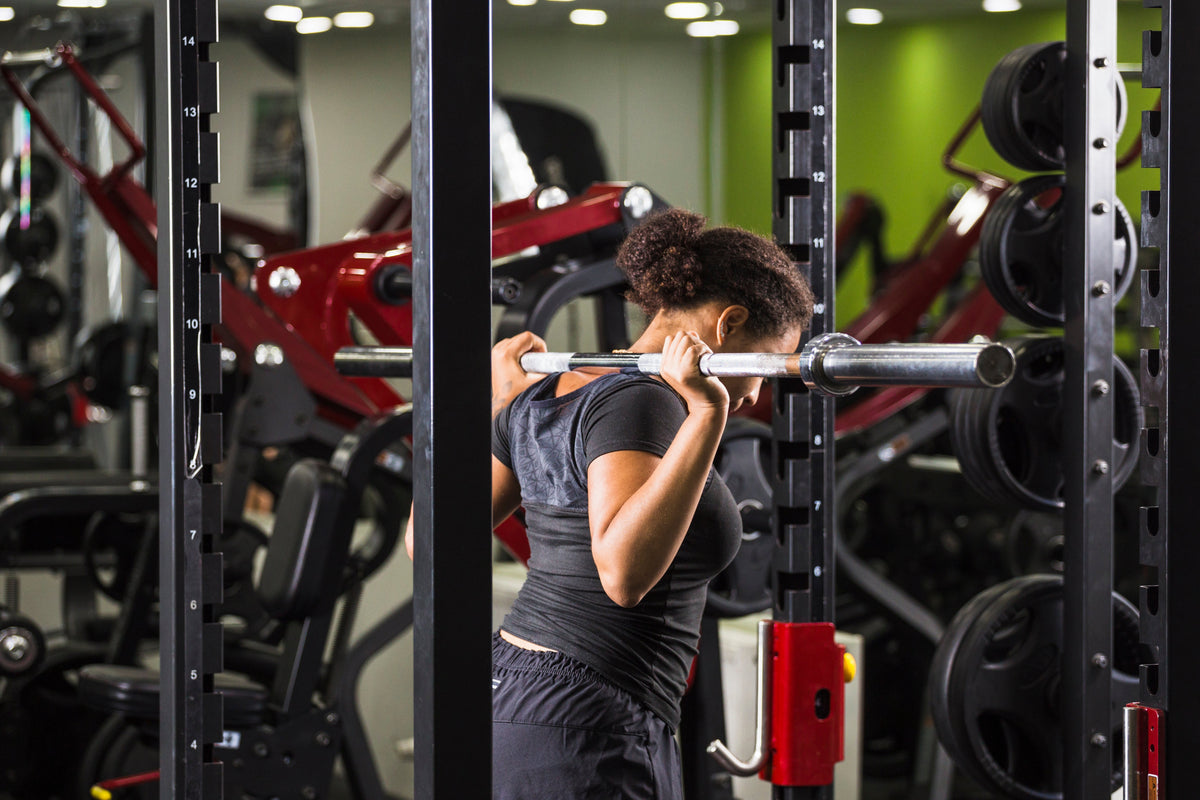
A power rack is a four-sided enclosure with uprights on all corners, integrated safety arms or spotter bars, and a J-hook system for racking the barbell. The enclosed format is its defining feature. The lifter trains inside the cage, which means the safety arms catch the bar if a rep fails without requiring a spotter.
This makes the power rack the right choice for anyone training heavy, training alone, or running a facility where users will be lifting near their limits without supervision. Powerlifting-focused programs, strength and conditioning setups, and commercial training spaces all benefit from the full cage configuration. The four-upright structure also adds rigidity and attachment compatibility that open rack formats cannot match.
The trade-off is footprint. A standard power rack takes up significant floor space, both in the area the rack itself occupies and in the clearance needed in front and behind for barbell loading. In a large garage or a dedicated training room, this is not a problem. In a multipurpose space or a smaller room, it can be.
If you are building out a complete training setup and want help planning a layout that works, our gym planning consultation is a good starting point.
What a Folding Squat Rack Offers That a Full Cage Cannot
The folding squat rack solves a specific problem: it allows serious barbell training in spaces that cannot permanently dedicate floor area to a rack. Wall-mounted and designed to fold flat when not in use, a folding squat rack reclaims the training footprint between sessions. A garage that serves multiple purposes, a basement with limited square footage, or a training studio that needs open floor space for other programming can all benefit from this format.
The engineering behind a quality folding squat rack has improved significantly over the past decade. Units from reputable commercial brands are rated to handle loads that serious strength training demands. When mounted properly to a structural wall with the correct anchor pattern, a well-built unit performs with the stability that heavy barbell work requires.
The limitation is that the folding format is inherently less enclosed than a full cage. Most folding racks provide safety arms, but the open structure means some exercises require more attention to bar path and rack height setup than a full cage allows. For lifters who train primarily at submaximal loads or who have established technique across the main barbell movements, this is a minor consideration. For beginners lifting near failure regularly, the full cage format offers more margin for error.
Key Factors to Evaluate Before Buying
Before committing to either format, work through these questions:
- How much floor space is available when the rack is in active use, and does that change when it is not?
- What is the heaviest load the rack will need to support across all programming?
- Will multiple users be training on it simultaneously or in close rotation?
- Is the wall construction solid enough to support a wall-mounted unit under heavy loading?
- What attachment compatibility does each rack offer for accessories like cable systems, band pegs, and dip bars?
Steel gauge matters in both formats. Commercial-grade racks are typically built to 11-gauge or heavier steel. Lighter gauges indicate a residential or light-commercial specification that may not hold up under serious training volume over time.
New vs. Used: Where to Spend and Where to Save
Used commercial power rack units from reputable brands represent some of the best value in the gym equipment market. These are structures built to handle hundreds of users per week in professional environments. When they age out of a commercial facility, they still have decades of useful life in a home gym or small studio setting. Cosmetic wear is normal. Structural integrity on a well-maintained commercial rack is rarely compromised.
At Freedom Fitness Equipment, we carry both new and used rack options, including folding squat rack configurations and full power rack setups when available in inventory. Equipment condition is always disclosed clearly, and our team can help you walk through which format suits your space and training.
If you are looking to build out a complete training setup beyond the rack, browse our gym equipment packages for bundled options across multiple equipment categories.
The right rack is the one that fits the training, fits the space, and holds up over time. Get the specification right, and it becomes a long-term foundation. Cut corners, and you might be replacing it sooner than expected.