
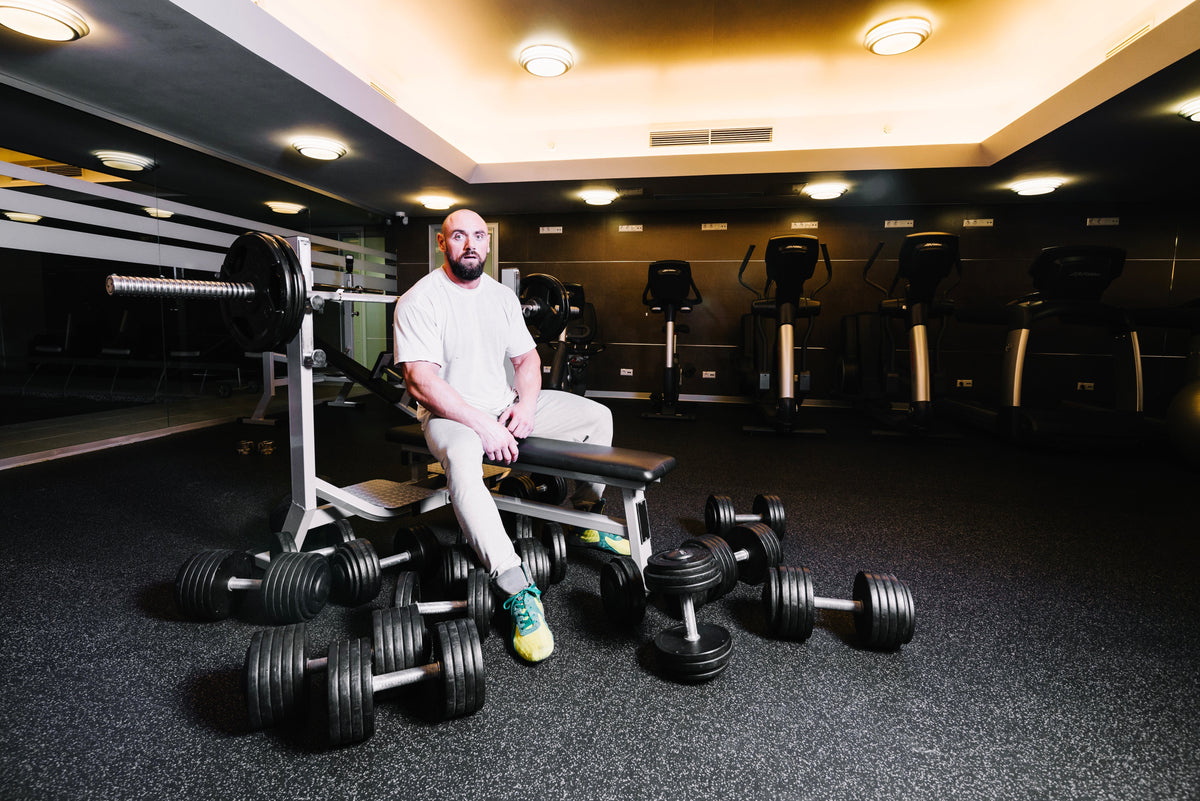
Most people building a home gym spend a lot of time choosing the right rack, the right barbell, the right bench. The flooring decision usually comes last, often treated as a finishing touch rather than a foundational one. That is a mistake that shows up quickly once training begins.
Training on the wrong surface creates problems in three directions at once. It damages the equipment sitting on top of it. It damages the structural floor underneath. And over time, it creates real issues for the person doing the training. None of these are minor inconveniences. They are the kind of problems that cost money to fix and take time to recover from.
What It Does to Your Equipment
Gym equipment is heavy, and it moves under load. Barbells get dropped. Weight trees get dragged. Racks shift slightly during heavy sets. When the floor beneath all of that is too hard, too slick, or too thin to absorb any of that force, the equipment pays for it.
Weight plates crack or chip when dropped on concrete without any give underneath. Barbell sleeves and collars wear faster when the bar repeatedly meets a surface with no absorption. Racks that sit on slick flooring without adequate grip develop movement over time, which stresses the bolted connections and changes the geometry of what is supposed to be a fixed structure. None of this is catastrophic on its own, but it shortens the lifespan of equipment that is supposed to last decades.
We have seen this firsthand with customers who come to us after years of training on inadequate surfaces. A surface with the right thickness and density for the training happening on it keeps the equipment doing what it was designed to do: absorb and transfer force through its own structure, not through hard contact with an unforgiving floor beneath it.

This one surprises people. The subfloor underneath a gym takes a significant beating if there is nothing between it and the training activity above.
Repeated impact on concrete with no flooring buffer creates micro-fractures over time. On hardwood or laminate floors, heavy equipment leaves permanent impressions, scratches, and surface damage that does not come out. Moisture from sweat that collects under equipment with no flooring barrier starts breaking down adhesives and finishes underneath. In a garage gym, this can eventually mean water intrusion or structural issues with the slab.
Beyond the surface damage, there is the sound and vibration issue. Without proper flooring, every dropped plate and every heavy step transfers directly into the building’s structure. If there are rooms below or shared walls, this becomes a real problem fast.
Good rubber workout flooring sits between your training and your floor and handles both. It absorbs impact before it reaches the subfloor. It creates a moisture barrier. It keeps equipment stable and reduces vibration transfer through the structure.
What It Does to Your Joints

This is where people feel the consequences most directly, though they do not always connect them to the surface they are training on.
Hard surfaces like bare concrete or thin foam tiles do not absorb impact. Every step, every jump, every rep that ends with any kind of ground contact sends that force back up through the feet, ankles, knees, and hips. Over weeks and months of consistent training, that cumulative impact adds up. It is not usually a single injury that sends someone to a physiotherapist. It is the slow accumulation of stress on joints that were never meant to absorb that kind of repeated loading.
The concern goes the other way too. A surface that is too soft, certain foam mats or cushioned tiles, creates instability under heavy lifts. When the floor compresses under a loaded squat or deadlift, the lifter is managing that shifting surface alongside the lift itself. That creates compensatory movement patterns that stress the knees, hips, and lower back in ways that build up as injury risk over time.
What you want is a surface that absorbs impact without compressing under load. Dense rubber does this well. It gives enough to reduce joint stress during high-impact activity but stays firm enough to support heavy compound movement without instability.
Getting It Right the First Time
Hammer Clad gym mats are built specifically for this. The poly-encapsulated recycled rubber construction gives you the density needed for heavy training without the compression that creates instability, and without the odor that standard crumb rubber products are known for. They are rated for the kind of training volume and impact that a serious gym produces regularly. It is one of our most popular flooring solutions at Freedom Fitness Equipment because it holds up under the kind of volume and impact a serious gym produces daily, not the occasional light workout.
If you are planning a larger space or need flooring coverage beyond individual mats, the full rubber workout flooring lineup includes rolls and interlocking tiles to suit different room sizes, layouts, and training applications. The Hammer Clad flooring page covers the full range with thickness specs so you can match the right format to what you are actually doing in the space.
The floor is not the glamorous part of a gym build. But it is the part that your equipment, your subfloor, and your joints are in contact with every single session. Getting it wrong affects everything above it. Browse the full gym flooring collection to find the right format and thickness for your setup.